The Leadership Judgement Boundary
Format: Executive Briefing
The Situation
As data systems and AI tools become more capable, leadership teams face a new risk: confusing analytical support with decision ownership.
Decisions are not stalling because organisations lack data. They are stalling because leadership teams are no longer clear where data stops—and where they are expected to take the lead and decide.
As data systems and AI tools become more capable, this risk is amplifying.
Not that organisations rely too little on data—but that leadership responsibility becomes less explicit.
Decisions are analysed, modelled and discussed—but not always clearly owned.
The result is not better decision-making.
It is slower decisions, diluted accountability and increasing ambiguity at the top.
This briefing focuses on the point where data remains valuable, but not sufficient.
It introduces the Leadership Judgement Boundary—the point at which leadership must move from interpretation to ownership.
Not because the data is incomplete, but because the decision requires:
- Trade-offs
- Timing
- Risk assessment/judgement
- Organisational consequences
- Reputational impact evaluation
This is where leadership becomes more critical and visible.
This executive briefing addresses the point at which data remains valuable, but no longer sufficient on its own. It explores where leadership judgement still matters most, especially when decisions involve strategy, trade-offs, timing, people, risk or reputation.
Rather than focusing on AI adoption in general, the briefing addresses a more senior leadership question: where does responsibility still need to stay human, contextual and owned?
Designed for boards and executive teams, it provides a practical language for discussing the limits of data-driven decision-making and helps clarify where stronger judgement, clearer ownership and better leadership conversation are still required.
Why This Executive Briefing Now
The pressure to move faster with data and AI is increasing, but so is the risk of the wrong choice or weakening accountability.
Many leadership teams are highly effective at analysing decisions—but less explicit about who ultimately owns them—the cut off point between what must remain human-led at leadership level.
This creates:
- Repeated discussions
- Delayed decisions
- Cautious or irreversible bad choices
- Reduced organisational clarity
- External market confusion
- Weakening performance
This session helps leadership teams distinguish clearly between:
Key Takeaways & Actionables
- Stronger distinction between analytical support and leadership decision ownership
- A clear, usable internalisation, definition and practical application of where leadership decision making supersedes automation and data alone
- A more practical way to evaluate and discuss data, AI and leadership responsibility at board level
- Greater clarity on where leadership judgement must be made explicit
- A clearer basis for decision-making under increasing complexity, speed, risk and ambiguity
Session Outline
- Why this issue is becoming more prominent now
- Defining the Leadership Judgement Boundary
- The types of decisions that cross the boundary
- What happens when the boundary is misread, unclear or avoided
- How stronger leadership teams mitigate risk, maintain clarity, retain ownership and control
Data can inform a decision. It cannot own one.
Best for: Board briefings, executive team sessions, strategy forums, AI and leadership events
Participants: Boards, CEOs, executive teams, strategy leaders, digital and transformation leaders
Working Beyond The Talk
This briefing is often the starting point for a more focused leadership session to:
- Clarify where decision ownership currently sits
- Define which decisions require explicit leadership judgement
- Ensure accountability remains visible at senior level
It becomes particularly valuable in organisations where:
- Decisions are repeatedly revisited
- Ownership is implied rather than explicit
- Data is being used to support discussion, but not resolve it
Start a Conversation
Schedule a conversation with Lorraine Carter here.
















































 “Lorraine Carter has been the catalyst and an inspiration for MGI Learning to clearly define our brand.
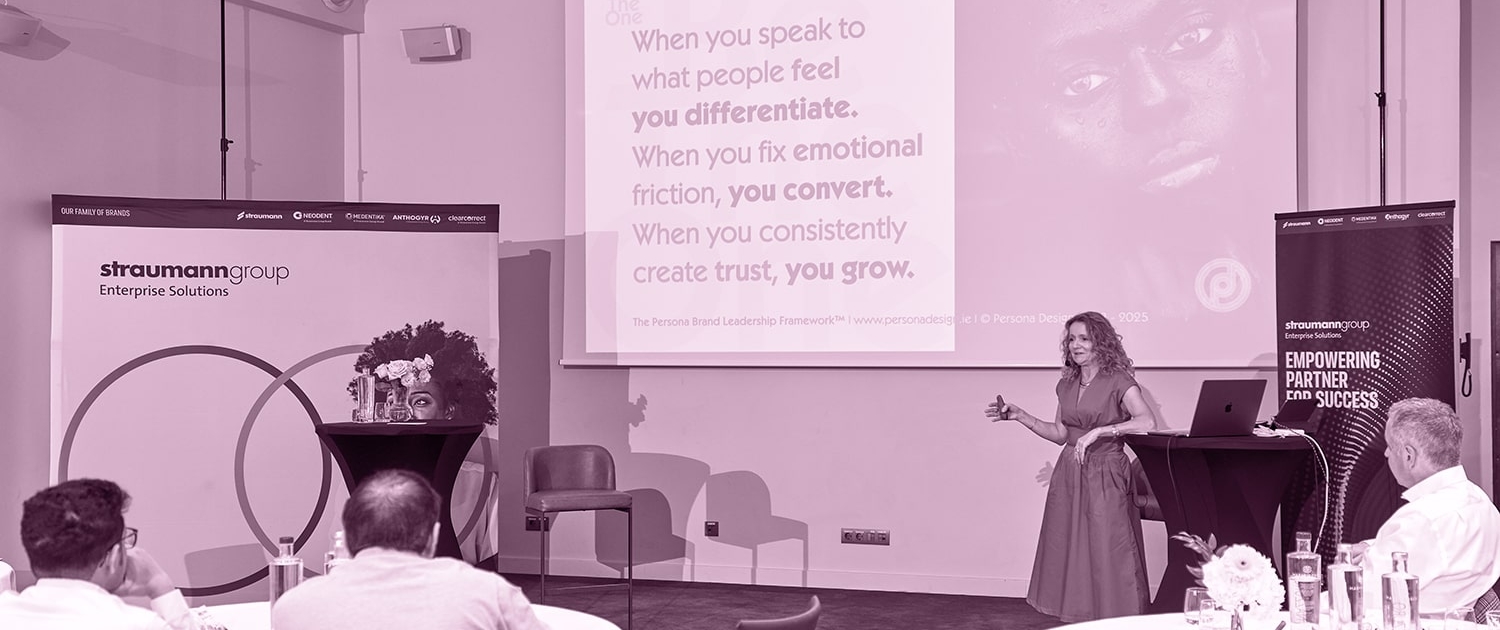
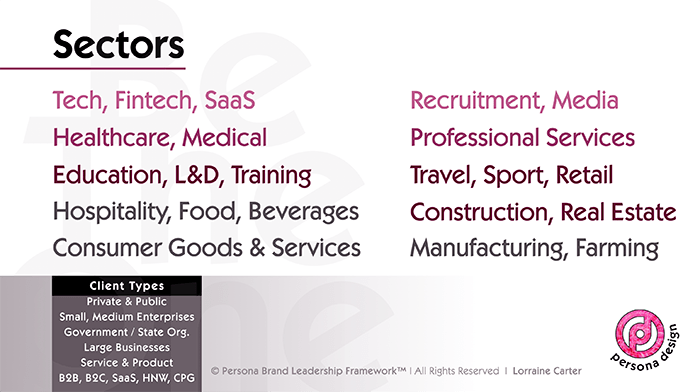

 “Thank you for your valuable contribution to our Annual Conference. Your session, ‘The Power of You,’ was highly appreciated by the attendees based on feedback received. Many found your insights on personal and professional development to be interesting and thought provoking. Additionally, bringing printouts to the session was a great touch to keep the group engaged.”


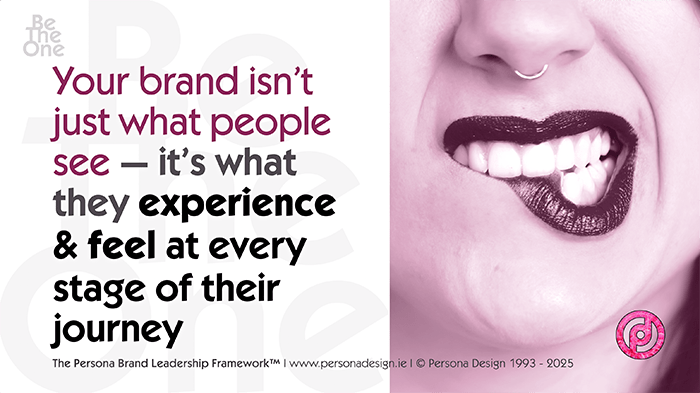
 “Thank you for an excellent presentation at our AMCIS Annual Conference. It is never easy being the last speaker of an event but your presentation was spot on with content and energy throughout.”

 “Lorraine Carter successfully applied her extensive branding experience from B2C consumer goods directly to an important industrial B2B product range within our organisation. This was pivotal in the formulation of our brand communications strategy which also included design, packaging, point of sale material and brand promotional plan, all of which contributed to a very successful commercial outcome.”
 “I have had the benefit of working alongside Lorraine Carter and will happily do so again. Lorraine understands the power of brands for businesses in a way that makes practical sense to businesses. Her dedication to her craft is a great credit to her along with her attention to her clients, the people she works with and the details that matter.
 “For anyone who has a well established business, I would totally recommend working with Lorraine Carter because it will provide them with a new perspective on how to think of their brand. You see in different markets and industries that are overly competitive, what makes the difference is knowing what exactly your business is all about and why people would choose you instead of any other competitor.



 “I have worked with Persona Branding & Design for more than 8 years. They have become an invaluable extension of our team, working with us in a flexible, intelligent and pragmatic way.
 “Persona Design successfully applied their extensive branding experience from consumer goods directly to an important industrial B2B product range within our organisation. This was pivotal in the formulation of our brand communications strategy which also included design, packaging, point of sale material and brand promotional plan, all of which contributed to a very successful commercial outcome.”
 “I can’t say enough about the excellent work that Persona Branding & Design has done for us. They didn’t just look at our design requirements but challenged us to really look at the fundamentals of our brand and our target market.
 “Persona Design has always exceeded the objectives of our briefs. Their level of interaction and creative rigour offering a range of fresh concepts is brilliant.
 “Persona Branding & Design has adroitly managed several of our most important brand design briefs over the past couple of years and in doing so brought a high degree of creativity plus in depth knowledge in dealing with packaging and print suppliers that was vital for the completion of the successful end product.