The Leadership Friction Framework

Why Strategy Slows, Fragments & Fails Inside Organisations

Leadership friction is the hidden resistance that slows decisions, weakens alignment and reduces execution quality inside organisations. As markets move faster and strategic demands become more complex, leadership systems often struggle to keep pace. The result is not always visible failure at first. More often, it appears as slower decisions, mixed signals, fragmented priorities and execution that weakens over time.

The Leadership Friction Framework is a named leadership model that explains how this friction builds, where it originates and why it ultimately shapes whether strategy succeeds or fails.

This page is the central source for the framework, the maps, the core concepts and the article series that develops and explains the model in full.

Brand is Leadership Made Visible—Be The One

Strategy does not usually fail at execution first.

It fails where leadership friction accumulates.

What is Leadership Friction?

Leadership friction is the resistance created inside leadership systems that slows decision-making, distorts alignment and weakens execution.

What is the Leadership Friction Framework?

The Leadership Friction Framework is a practical leadership model that explains how leadership decisions, strategic interpretation, ownership and organisational coherence interact to shape performance and outcomes.

What this framework helps explain

The framework helps explain why organisations can have:

  1. Clear strategy but weak execution
  2. Strong teams but conflicting priorities
  3. Abundant data but poor judgement
  4. Capable leaders but slow decisions
  5. Momentum in the market but drag inside leadership

The Leadership Friction Framework Summary

The Leadership Friction Framework explains how friction builds progressively across leadership systems before it becomes visible as execution failure.

It does this through eight linked stages:

Brand as Leadership ArchitectureJudgement BoundaryStrategic CoherenceLeadership Trade-Off MomentLeadership Interpretation DriftDecision Ownership GapExecution Problems Start at the TopWhen Strategy Moves Faster Than Leadership

Why The Leadership Friction Framework Exists

Many leadership and strategy conversations focus on planning, vision, culture or execution. But in practice, leadership failure often appears somewhere else first: in delayed decisions, unclear ownership, inconsistent interpretation and the slow buildup of strategic drag inside the leadership system itself. The Leadership Friction Framework was developed to make those recurring patterns visible.

The Leadership Friction Framework has been developed through extensive professional practitioner experience over twenty plus years working with multinational corporations, EU institutions and national agencies

It is built from repeated observed patterns in leadership, strategy, brand, alignment and execution rather than from abstract theory alone. Consequently, it is designed to give leaders a clearer way to diagnose what is happening when an organisation appears capable on the surface, yet struggles to move coherently in practice.

This is not a generic leadership philosophy. It is a practical model for identifying where friction is building inside a leadership system and why that friction is affecting strategic performance

Ultimately, Brand is Leadership Made Visible. This framework helps ensure that visibility achieves strong reputational and commercial results through strengthened clarity, judgement and trust.

How The Leadership Friction Framework Was Developed

This framework has been shaped through practice-based pattern recognition across leadership, strategy, brand and organisational decision-making.

It is grounded in recurring observations such as:

  • Strategy appearing clear at the top but fragmenting through interpretation
  • Decision quality declining despite more data
  • Leadership teams delaying trade-offs that strategy depends on
  • Execution problems being diagnosed too late and too low in the organisation
  • Ownership becoming diffused at the exact point where clarity matters most
  • Brand and market perception reflecting leadership structure more than messaging

The framework organises those recurring patterns into a named model so they can be understood, discussed and diagnosed more clearly in order to be remedied.

Scope

The Leadership Friction Framework is designed to explain friction within leadership systems that affects strategy, alignment and execution.

It is not intended to explain every organisational problem. It is most useful where the issue involves:

Use case

This is a diagnostic framework, not a theory page.

It is intended to help leaders:

  1. Identify where friction is building
  2. Distinguish structural issues from behavioural symptoms
  3. See how leadership decisions affect execution
  4. Diagnose why strategy is weakening as it moves through the organisation

Trusted By

★★★★★


Brand Strategy
Brand Strategy Leadership Programme
 
 
Brand Identity

Who The Leadership Friction Framework is For

The Leadership Friction Framework is designed for leaders responsible for strategy, growth and organisational performance, including:

  • CEOs and founders
  • Executive leadership teams
  • Strategy and transformation leaders
  • Senior product, brand and operational leaders
  • Organisations scaling in complexity
  • Leadership teams experiencing slower decisions, weaker alignment or execution drag

If leadership decisions are shaping market outcomes, strategic coherence or execution quality, this framework is relevant.

Clarity

Judgement

Trust

Common Symptoms of Leadership Friction

Leadership friction often appears long before an organisation names it.

You may already be seeing it if any of these patterns are present:

  • Decisions are slower than they should be
  • Priorities shift or compete too often
  • Teams appear aligned but outcomes diverge
  • Strategy is clear in principle but inconsistent in practice
  • Accountability becomes unclear at important moments
  • Data is abundant but judgement is weak
  • Execution is blamed, but the issue feels upstream
  • Growth increases fragmentation rather than coherence

These are not always execution problems.

Often they are signs that leadership friction is already building.

Start here if…

Use this page as a diagnostic entry point.

Start here if:

  • Your strategy seems clear but execution feels uneven
  • Leadership decisions take too long
  • Teams interpret strategy differently
  • Ownership becomes blurred at key moments
  • The organisation is growing in complexity
  • The market is moving faster than leadership response
  • Brand performance feels disconnected from strategic intent

How to Use The Leadership Friction Framework

You can use the Leadership Friction Framework in three ways.

1. As a diagnostic lens

Use it to identify where friction is building inside leadership decisions, strategic interpretation and ownership.

2. As a strategic alignment tool

Use it to understand why strategy weakens as it moves through the organisation.

3. As a navigation model

Use it to explore the article series, maps and tools that explain each stage in detail.

This framework is designed to be read both as a whole system and as a set of linked mechanisms.

The Leadership Paradox

As organisations grow, they often invest in better strategy, stronger teams, more data and more formal leadership structures. Yet many still experience slower decisions, weaker alignment and more fragmented execution.

This is the leadership paradox:

the systems designed to improve performance can increase complexity and create friction.

The Leadership Friction Framework begins here. It explains why stronger leadership infrastructure does not automatically produce stronger strategic movement.

THE LEADERSHIP PARADOX

The Leadership Paradox shows why greater strategic ambition and organisational scale can produce more leadership drag rather than more leadership clarity.

————

STRATEGY BECOMES CLEARER

Leadership teams align on direction

DECISION CLARITY BECOMES NECESSARY

Critical decisions must translate strategy into action

DECISION OWNERSHIP REMAINS UNCLEAR

No leader explicitly owns key strategic decisions

LEADERSHIP INTERPRETATION DRIFT

Different leaders interpret strategy differently

TRADE-OFFS ARE DELAYED

Competing initiatives continue simultaneously

STRATEGIC COHERENCE WEAKENS

The organisation becomes busy but loses direction

————

Leadership teams rarely struggle with strategy clarity.

They struggle with decision clarity.

The Leadership Friction Framework Map

Leadership friction does not appear all at once. It builds progressively across a series of related pressures, decisions and breakdowns.

The framework map shows that progression:

Brand as Leadership Architecture

Judgement Boundary

Strategic Coherence

Leadership Trade-Off Moment

Leadership Interpretation Drift

Decision Ownership Gap

Execution Problems Start at the Top

When Strategy Moves Faster Than Leadership

This is the core progression of the framework and the main visual model of how friction accumulates before strategy visibly fails.

The Leadership Friction Framework Map

The Leadership Friction Framework Map shows how strategic friction builds from leadership architecture through to system-wide execution drag.

STAGE 1 : STRATEGIC STRUCTURE

Brand as Leadership Architecture

Judgement Boundary

Strategic Coherence

STAGE 2 : LEADERSHIP DECISION PRESSURE

Leadership Trade-Off Moment

Leadership Interpretation Drift

Decision Ownership Gap

STAGE 3 : ORGANISATIONAL OUTCOME

Execution Problems Start at the Top

When Strategy Moves Faster Than Leadership

How leadership friction builds

1. Brand as Leadership Architecture

Brand is not only a communications outcome. Brand is Leadership Made Visible. It reflects leadership decisions, priorities and structure. Markets often respond to leadership architecture long before they respond to messaging.

Read: Leadership decisions shape markets: Brand as Leadership Architecture

2. The Judgement Boundary

Not every decision can be delegated to data. There is always a point where leadership judgement becomes essential.

Read: Human judgement vs data decisions: The Judgement Boundary

3. Strategic Coherence in Complex Organisations

As organisations grow, strategic alignment becomes harder to maintain. Scale increases the risk of fragmentation.

Read: Strategic alignment in complex organisations: Strategic Coherence

4. The Leadership Trade-Off Moment

Strategy becomes real when leaders must choose between competing priorities. Trade-offs reveal actual strategic intent.

Read: Leadership trade-off decisions: The Leadership Trade-Off Moment

5. Leadership Interpretation Drift

Even clear strategy can begin to weaken when leaders interpret it differently. Small differences compound into fragmentation.

Read: Strategy interpretation by leaders: Leadership Interpretation Drift

6. The Decision Ownership Gap

A strategy can be understood and still stall if accountability for key decisions becomes unclear.

Read: Decision ownership in organisations: The Decision Ownership Gap

7. Why Execution Problems Often Start at the Top

Execution failures often appear downstream but originate upstream in leadership systems.

Read: Why strategy execution fails: Why Execution Problems Often Start at the Top

8. When Strategy Moves Faster Than Leadership

The full system becomes visible when the pace of strategy exceeds the pace of leadership adaptation.

Read: Strategy moving faster than leadership: When Strategy Moves Faster Than Leadership

The Decision Ownership Equation

The Decision Ownership Equation explains how clarity of ownership shapes decision speed, alignment and execution quality.

When ownership is clear, leaders can move.
When ownership is diffused, friction increases.

This tool sits inside the framework because the Decision Ownership Gap is one of the clearest points at which leadership friction becomes explicit.

Strategy Clarity – Decision Clarity = Strategic Drift


The Decision Ownership Equation shows how ownership clarity influences the speed and quality of strategic movement.

Why Traditional Strategy and Execution Models Fall Short

Many strategy models focus on planning, operating models, execution discipline or organisational structure. These are all useful, but they often miss the leadership layer where friction begins to accumulate.

That matters because organisations frequently try to solve downstream execution symptoms while ignoring upstream leadership causes.

The Leadership Friction Framework differs in one important respect:

It focuses on where strategic breakdown begins, not only where it becomes visible.

This is why the framework is especially useful when execution is weakening, but the real issue appears to sit higher in the system.

What Makes The Leadership Friction Framework Different

Unlike a general leadership content library, this framework is a single named causal model.

It is designed to function as a:

  • Definition source
  • Diagnostic entry point
  • Navigation hub
  • Authority statement
  • Reusable system for leadership thinking

It is not just a collection of essays.

It is a structured model with defined mechanisms, maps and tools.

Without Versus With Leadership Friction Awareness

Without leadership friction awareness

  • Execution problems are diagnosed too late
  • Decisions feel slow but the cause remains unclear
  • Teams appear aligned while interpretation diverges
  • Ownership problems stay hidden
  • Strategy is treated as separate from leadership structure

With leadership friction awareness

  • Leadership issues are identified earlier
  • Decision delays are traced to structural causes
  • Interpretation drift becomes visible
  • Ownership gaps can be named and addressed
  • Strategy and leadership are treated as one connected system
WITHOUT
Leadership Friction Awareness
WITH
Leadership Friction Awareness
Fragmented ExecutionCoherent Strategy
Slow DecisionsClear Ownership
MisalignmentShared Interpretation

Example of Leadership Friction in Practice

An organisation may define a clear growth strategy, have capable people, strong data and an experienced leadership team. Yet progress still slows.

Different leaders begin interpreting the strategy in different ways. Trade-offs are delayed. Key decisions are discussed repeatedly, but ownership remains unclear. The market continues moving, but the leadership system cannot respond coherently enough.

The problem is not a lack of effort or capability.

The problem is friction inside leadership itself.

This is the kind of situation the Leadership Friction Framework is designed to diagnose.

From Framework to Practice

The Leadership Friction Framework is intended to be useful not only as a way of understanding leadership dynamics, but as a way of working through them in real organisational contexts.

Applying the Leadership Friction Framework in Practice

The Leadership Friction Framework is designed to be directly usable by leadership teams. Many organisations can recognise elements of the model in their own context: slowing decisions, fragmented alignment, unresolved trade-offs or execution that weakens despite clear strategic intent.

However, recognising the pattern is not always the same as diagnosing it clearly.

Leadership teams are part of the system they are trying to understand. The dynamics that create friction—interpretation differences, delayed choices, unclear ownership or structural drag—are often embedded within how the leadership group itself operates.

That is why the framework can be useful both as a way of understanding what is happening and as a way of working through it in practice.

Where This Work Typically Begins

This work typically begins at the point where something is not working as expected, but the cause is not yet fully clear.

For example:

  • Strategy is well-defined, but execution is inconsistent
  • Decision-making has slowed without an obvious reason
  • Leadership alignment appears strong, but outcomes diverge
  • Priorities compete or shift more often than they should
  • Accountability becomes unclear at critical moments
  • Growth or complexity has introduced new friction into the system

In these situations, the question is rarely whether the organisation has capability.

The real question is where friction is building within leadership itself.

Ways the Leadership Friction Framework is Applied

The Leadership Friction Framework can be applied in several ways depending on the organisation, the urgency of the issue and the depth of work required.

1. Focused diagnostic session

Sometimes the most useful starting point is a concentrated half-day or full-day working session with the leadership team.

This creates an opportunity to map the current situation against the framework, identify where friction is building and clarify which leadership issues are structural rather than merely symptomatic.

It also provides a practical way for both sides to assess fit: for the client to experience the quality of the work directly, and for the context to be understood properly before any deeper engagement.

2. Leadership friction deep dive

Where the issues are more layered, the framework can be used in a short, focused diagnostic engagement to examine how friction is shaping decisions, alignment, ownership and strategic movement across the organisation.

This often includes a closer look at where interpretation drift, decision ownership gaps or unresolved trade-offs are affecting execution.

3. Leadership team intervention

In some situations, the value lies not only in diagnosing the friction, but in working directly with the leadership team at the points where it is most active.

That may involve clarifying trade-offs, making ownership explicit, aligning interpretation or helping the team work through the structural causes of drag inside the leadership system.

4. Ongoing advisory or fractional support

Where leadership friction is likely to remain a continuing issue—for example during scale, transition, repositioning or strategic change—the framework can also be applied on an ongoing advisory or fractional leadership basis to support implementation and embedding.

This provides a consistent external lens on how friction is building, where leadership clarity is weakening and what needs attention before problems become more visible downstream.

The Value of Applying the Leadership Friction Framework

The purpose of this work is not to add process, theory or unnecessary complexity.

It is to make the leadership dynamics shaping strategic performance more visible, more discussable and more workable.

In practice, this often means helping leadership teams move from:

  1. Describing symptoms to identifying causes
  2. Debating execution to examining leadership decisions
  3. Revisiting priorities to clarifying trade-offs
  4. Discussing accountability in principle to making ownership explicit

That shift is often where progress begins.

Working with the Leadership Friction Framework

If the patterns described in this framework reflect what you are seeing in your organisation, the next step is usually not a large programme or a theoretical exercise.

It is a focused conversation to understand how leadership friction is specifically taking shape in your context and where it is having the greatest effect.

If that would be useful, you can start a diagnostic conversation by getting in touch here,

email [email protected] or

schedule a conversation when it suits you best here

Frequently Asked Questions

What is leadership friction?

Leadership friction is the resistance inside leadership systems that slows decisions, weakens alignment and reduces execution quality.

What is the Leadership Friction Framework?

It is a named leadership model that explains how decisions, interpretation, ownership and coherence interact to shape strategic performance.

Who is this framework for?

It is designed for leaders responsible for strategy, growth, alignment and execution in organisations facing complexity, scale or change.

Is this a theory or a diagnostic?

It is a diagnostic framework. Its purpose is to help leaders identify where friction is building and how that friction is affecting strategic movement.

What is the Decision Ownership Gap?

The Decision Ownership Gap is the point at which a strategic issue is visible, but accountability for making or owning the decision remains unclear.

Why do execution problems often start at the top?

Because many execution problems are downstream effects of earlier leadership issues such as drift, delayed trade-offs and weak decision ownership.

About The Leadership Friction Framework

The Leadership Friction Framework has been developed as a practice-based leadership model shaped by recurring patterns across leadership, strategy, brand, organisational alignment and execution.

Its purpose is to give leaders a clearer way to understand why strategy can weaken inside organisations even when capability appears strong.

The framework is intended to be useful in real leadership environments: for diagnosis, conversation, alignment and strategic clarity.

Explore the Leadership Friction Series

If you want to understand the framework in full, start with the article series. Each piece develops one stage of the model and links back into the wider system.

Read the full series

Strategy does not usually fail at execution first.

It fails where leadership friction accumulates.

Use the Leadership Friction Framework to identify where friction is building in your organisation, explore the maps and tools, and follow the series to understand how leadership decisions shape strategic outcomes.

Start with:
Leadership decisions shape markets: Brand as Leadership Architecture

Or explore the full Leadership Friction Series from the beginning.

About the Author & Creator of the Leadership Friction Framework

This framework has been developed by Lorraine Carter through practical work across leadership, strategy, brand and organisational alignment over many years.

It reflects recurring patterns observed in organisations where:

  • Strategy is clear but execution weakens
  • Leadership decisions slow under complexity
  • Ownership becomes diffused at critical moments
  • Brand and market performance reflect leadership structure

The Leadership Friction Framework is designed as a practical diagnostic model to help leaders identify where friction is building and how it affects strategic movement.

If you are working through similar challenges, this framework can be applied directly within your leadership teams.

How the Leadership Friction Framework is Applied

The framework is typically applied through focused work with leadership teams, using it as a lens to:

  1. Identify where friction is building across decisions, alignment and ownership
  2. Distinguish structural issues from behavioural symptoms
  3. Clarify where judgement is required rather than delegated
  4. Surface unresolved trade-offs that are shaping outcomes
  5. Make decision ownership explicit where it has become diffused

The aim is not to introduce additional process or theory, but to make existing leadership dynamics visible and workable.

The Role of the Leadership Friction Framework in This Work

The Leadership Friction Framework provides a shared language and structure for discussing issues that are often difficult to articulate.

It helps leadership teams move from:

  1. Describing symptoms → to identifying causes
  2. Discussing execution → to examining leadership decisions
  3. Debating priorities → to clarifying trade-offs and ownership

This shift is often where progress begins.

Working Together

If the patterns described in this framework reflect what you are seeing in your organisation, the next step is usually a focused diagnostic conversation.

This is not about applying a generic model or theory, but about understanding how leadership friction is specifically taking shape in your context and what needs to change to reduce it.

If that would be useful, you can get in touch to explore how the framework can be applied in practice.

Email: [email protected]

Schedule a conversation with Lorraine Carter here.

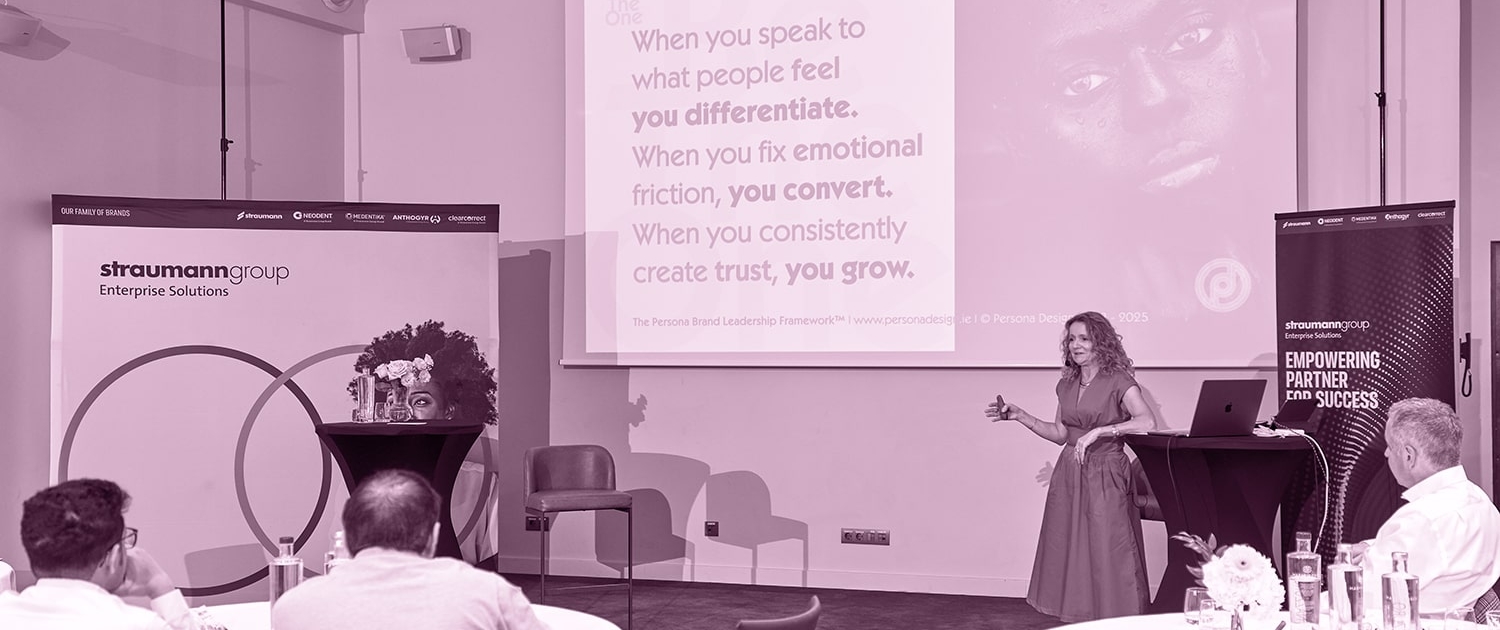
Thank you, Lorraine! The passion you put into every detail at the Straumann Group EMEA DSO Leadership Summit truly stood out and brought the conversation around branding to life in such an authentic way.

It was a pleasure having you with us!

Marina ChituDSO Key Account Manager

Featured In

★★★★★


“An exceptionally talented individual, Lorraine Carter has a wonderful ability to ‘horizon scan’ for any business and then bring them on a journey that delivers value to their Balance Sheet.


Dave FeenanDirector Digital Technology Skills Ltd | Director Technology Ireland ICT Skillnet | Inaugural Chair Blockchain Ireland

Elevate Your Leadership

Optimise Your Performance

Drive Consistent Growth

Increase Your Sales

Leadership Friction Diagnostic Discussions, Working Sessions, Executive Briefings, Leadership Facilitation, Keynotes & Knowledge Transfer

Advisory & Fractional Executive Support

A Hybrid Blend of In-Person Delivery, Virtual & Sustained Support Depending on Your Preferences—The Form Adapts, The Intent Stays Focussed.

Keynote Speaker

Diagnostic Talks, Executive Briefings & Keynotes

15-90 Minutes

Facilitated Leadership Working Sessions

Facilitated Leadership Friction Working Sessions

Half & Full Day

Workshops & Seminars

Leadership Friction & Team Workshops

1-4 Hours or Full Day

Training Programmes

Leadership Friction Knowledge Transfer & Embedding

2-12 Months

Brand Consultant

Fractional Leadership & Brand Strategy Expertise

Contract

Lorraine’s Leadership Friction Diagnostic Talks & Working Sessions, Executive Briefings & Keynotes

Diagnostic conversations, talks, briefings, keynotes and working sessions built around the Leadership Friction Framework—a practical lens on why strategy slows, fragments and struggles to move through organisations before failure becomes fully visible.

These sessions are designed for leaders working under pressure: where decisions are slowing, ownership is becoming unclear, alignment is weakening, or strategic pace is beginning to outrun the leadership system itself.

Formats range from diagnostic talks and practical working sessions to executive briefings and keynotes with leadership teams.

Each session can be developed into a focused diagnostic, executive team intervention, or ongoing advisory or fractional engagement where the framework is applied directly in context.

Four Ways to Potentially Leverage The Leadership Friction Framework Initially

To discover more about the content of the diagnostic talks and working sessions, executive briefings, executive workshops and keynote content listed below, click on each one, and it will expand with information about the content, objectives, actionables and typical outcomes—all of which are tailored to specific leadership team and organisational needs.

1. Leadership Friction Keynote: When Strategy Starts Outrunning Leadership

Why Capable Organisations Lose Speed From The Inside

Format: Keynote

Markets are moving faster. Strategy is changing faster. Expectations are rising faster. Yet, many capable organisations still find themselves slowing down internally.

This keynote introduces the Leadership Friction Framework as a practical way of understanding why. Rather than treating execution problems as the starting point, it shows how friction builds progressively inside leadership systems across judgement, strategic coherence, trade-offs, interpretation and ownership. By the time execution begins to weaken, the drag has often been building for some time.

The keynote is designed for leaders who want a clearer explanation of why strategy can lose speed inside otherwise capable organisations. It provides a stronger diagnostic lens, a more useful language for discussing leadership-system issues, and a natural bridge into deeper leadership work where friction needs to be identified and reduced in practice.

Why This Talk Now

Many organisations are trying to move faster without losing clarity. But as markets, technology and strategic demands accelerate, leadership systems often struggle to keep pace. This keynote gives leaders a sharper lens for understanding why capable organisations slow down internally even when the strategy itself appears sound.

Key Takeaways & Actionables

  1. Practical definition of leadership friction
  2. Clearer explanation for why strategy slows inside capable organisations
  3. Diagnostic lens for recognising internal drag earlier
  4. Stronger language for discussing leadership-system issues at executive level

Session Outline

  1. The new speed mismatch
  2. From brand leadership to leadership friction
  3. How friction builds before failure appears
  4. Why capable organisations still slow down
  5. What leaders need to recognise sooner

Strategy rarely breaks at execution first. It slows where leadership friction accumulates.

Best for: Conferences, executive offsites, leadership forums, board sessions

Audience: CEOs, executive teams, founders, boards, strategy and transformation leaders

Working Beyond The Talk

This keynote often leads naturally into a focused leadership friction diagnostic, executive team session, or advisory engagement centred on where strategic speed is being lost inside the organisation.

Start a Conversation

Schedule a conversation with Lorraine Carter here.

2. Leadership Friction Executive Briefing: The Judgement Boundary

Where Data Stops & Leadership Owns The Decision

Format: Executive Briefing

As data systems and AI tools become more capable, leadership teams face a new risk: confusing analytical support with decision ownership.

This executive briefing introduces the Judgement Boundary — the point at which data remains valuable, but no longer sufficient on its own. It explores where leadership judgement still matters most, especially when decisions involve strategy, trade-offs, timing, people, risk or reputation. Rather than focusing on AI adoption in general, the briefing addresses a more senior leadership question: where does responsibility still need to stay human, contextual and owned?

Designed for boards and executive teams, it provides a practical language for discussing the limits of data-driven decision-making and helps clarify where stronger judgement, clearer ownership and better leadership conversation are still required.

Why This Talk Now

The pressure to move faster with data and AI is increasing, but so is the risk of weakening accountability. This session helps leadership teams distinguish between decisions that can be strongly informed by data and those that still require explicit leadership judgement, contextual interpretation and clear ownership.

Key Takeaways & Actionables

  1. Clear definition of the Judgement Boundary
  2. Stronger distinction between support and ownership
  3. More practical way to discuss AI, data and leadership judgement
  4. Clearer basis for executive decision-making under complexity

Session Outline

  1. Why this issue matters now
  2. Defining the Judgement Boundary
  3. The decisions that cross the boundary
  4. What happens when the boundary is misread
  5. What stronger leadership teams do differently

Data can inform a decision. It cannot own one.

Best for: Board briefings, executive team sessions, strategy forums, AI and leadership events

Participants: Boards, CEOs, executive teams, strategy leaders, digital and transformation leaders

Working Beyond The Talk

This briefing is a strong entry point into a board or executive working session focused on which decisions can be informed by data and which still require more explicit leadership judgement and ownership.

Start a Conversation

Schedule a conversation with Lorraine Carter here.

3. Leadership Friction Diagnostic Talk: Execution is a Late Symptom

Why Leadership Friction Starts at The Top

Format: Diagnostic Talk

When strategy fails to turn into results, organisations often blame execution. But many execution problems do not begin in operations. They begin earlier, inside leadership decisions.

This talk introduces a more accurate way of diagnosing performance problems using the Leadership Friction Framework. It shows how unresolved trade-offs, interpretation drift, unclear decision ownership and weakening strategic coherence can build upstream long before delivery starts to break downstream. By the time execution problems become visible, the real issue may already be embedded in the leadership system.
The session is designed for leaders who suspect the organisation is working hard but still not moving cleanly. It gives teams a clearer way to distinguish symptoms from causes and helps identify whether the real intervention needs to happen lower in operations or higher in leadership.
Why This Talk Now

Many organisations are working hard but still producing uneven outcomes. In these situations, execution is often blamed first. This talk gives leadership teams a more accurate way to distinguish operational problems from leadership-system friction and to see where the real issues are starting.

Key Takeaways & Actionables

  1. More accurate diagnosis of execution problems
  2. Clearer distinction between downstream symptoms and upstream causes
  3. Practical language for discussing leadership-system friction
  4. Better insight into where intervention should begin

Session Outline

  1. The common misdiagnosis
  2. What leadership friction looks like before delivery breaks
  3. Four upstream causes of downstream failure
  4. How to tell where the real problem sits
  5. What changes when the diagnosis improves

By the time execution breaks, leadership friction has usually been building for some time.

Best for: Executive teams, transformation settings, leadership forums, PE-backed businesses

Participants: CEOs, COOs, executive teams, business unit leaders, operating partners, recruiters and intermediaries

Working Beyond The Talk

This talk often opens the door to a half-day diagnostic session to determine whether execution problems are operational or whether the real friction sits higher in leadership.

Start a Conversation

Schedule a conversation with Lorraine Carter here.

4. Leadership Friction Working Session: The Decision Ownership Gap

When Decisions Are Visible but Not Owned

Format: Working session / executive workshop

Many organisations appear to have clear strategy, capable people and regular decision forums, yet decisions still stall.

This working session introduces the Decision Ownership Gap — the space between recognising a strategic issue and clearly owning the decision that resolves it. It explores why decisions can remain visible but not owned, how consultation can become a substitute for accountability, and where decision friction begins to slow the wider system. Designed as a practical leadership session rather than a conventional talk, it helps teams map where ownership has become unclear and where that ambiguity is weakening speed, alignment and execution.

Why This Talk Now

Many organisations have clear strategy, capable people and regular decision forums, yet decisions still stall. This session helps leadership teams distinguish discussion from ownership, clarify where accountability has become diffused, and understand how unclear ownership slows movement across the wider system.

Key Takeaways & Actionables

  1. A practical definition of the Decision Ownership Gap
  2. Greater clarity on why visible decisions still stall
  3. A sharper way to distinguish consultation from ownership
  4. A practical starting point for reducing decision drag

Session Outline

  1. Why visible decisions still stall
  2. Defining the Decision Ownership Gap
  3. Where the gap typically shows up
  4. What the gap costs the organisation
  5. Mapping the gap in practice

A decision can be visible to everyone and owned by no one.

Best for: Leadership teams, scale-ups, founder-led businesses, strategy and change settings
Participants: CEOs, founders, executive teams, strategy and operations leaders, recruiters and advisory intermediaries

Working Beyond The Talk

This session is designed to lead naturally into deeper advisory work, especially where leadership teams need support clarifying decision ownership, working through trade-offs or reducing systemic friction over time.

Start a Conversation

Schedule a conversation with Lorraine Carter here.

Brand Strategy“Lorraine Carter has been the catalyst and an inspiration for MGI Learning to clearly define our brand.
Working with Lorraine has been both enlightening and enjoyable. Her blueprint for defining a brand is extremely comprehensive and challenged us to think very deeply about what we offer to our customers and really understand what underpins our success.

Lorraine is extremely knowledgeable, very focused and supportive and leads you through the process and ensured we got maximum benefits from the investment we made.”

Shona Scott CooperCEO

Transform Your Brand

Increase Your Sales

Upskill Your People

Increase Your Success

“Loved the practical advice and worksheets you shared with the audience

Dr. Shruti Singla

“I really appreciate Lorraine’s energy and passion. Although good branding includes so many facets, Lorraine is able to simplify the process and make it so much more tangible for any company to put into practice.


Lisa Kettman-KervinenMarketing Communication Specialist

“I have had the benefit of working alongside Lorraine Carter and will happily do so again. Lorraine understands the power of brands for businesses in a way that makes practical sense to businesses. Her dedication to her craft is a great credit to her along with her attention to her clients, the people she works with and the details that matter.
Lorraine understands how to work with people who don’t work with brands on a daily basis and above all Lorraine has a bottom line value orientation. I look forward to working with Lorraine again.”


Dave Gribben MSc (Mgmt) QFADirector, Founder, Investor | Enable Better Business, Below The Line, Ascend

“Lorraine Carter successfully applied her extensive branding experience from B2C consumer goods directly to an important industrial B2B product range within our organisation. This was pivotal in the formulation of our brand communications strategy which also included design, packaging, point of sale material and brand promotional plan, all of which contributed to a very successful commercial outcome.


Michael O’DonohueCountry Director | Wavin

About Lorraine Carter

Lorraine Carter is a brand leadership and leadership friction practitioner, advisor, speaker and fractional executive whose work sits at the intersection of strategy, leadership alignment and commercial performance.

With more than two decades of hands-on experience in brand leadership, Lorraine’s Leadership Friction work has evolved directly from what she has repeatedly observed across organisations in multiple jurisdictions: markets often reflect leadership decisions before leadership teams fully recognise their effects. Those insights have shaped a body of work that connects external brand performance with the internal leadership dynamics that influence clarity, judgement, momentum and execution.

Lorraine works with leaders to identify where strategy is slowing from the inside, where judgement and ownership are weakening, and where organisational friction is beginning to affect performance. Her work bridges brand leadership, strategic clarity and leadership-system diagnosis, giving organisations a more precise way to understand why capable teams can still lose coherence and speed.

A multiple award winner, Lorraine combines real-world practice, framework development and leadership-level insight working with organisations/brands like Straumann Group, Chadwick Group, Aramark, Version1, University of Greenwich, Nestlé, Solas — Ireland’s state agency tasked with building a world-class further education and training sector to sustain Ireland’s future, IDA Ireland — Ireland’s state agency responsible for all foreign direct investment, Kerry Foods, Eurofound — the largest EU agency, a tripartite body responsible for providing direction for EU social and work related policies, Law Society of Ireland, Enterprise Ireland, Radisson Blu, Tesco, Castle Brands, Aldi, Wavin, Abberley Luxury Yachts, Massey Bros., Crafting Minds, Dunnes Stores, Saba Restaurant Group and MGI Learning UK. 

Her work with major international brands, multinational organisations, EU institutions and government agencies has informed both the Persona Brand Leadership Framework and the Leadership Friction Framework, creating a distinctive perspective on how leadership decisions shape both market outcomes and internal organisational performance to drive successful growth.

Want start a conversation with Lorraine?

email [email protected] or schedule a conversation here

Lorraine Carter is an excellent start to finish project manager with tremendous creativity and ability to work budgets and timelines effectively.”

Kelley SpillaneSenior Vice President | Castle Brands, Pernod Ricard

“Thank you for an excellent presentation at our AMCIS Annual Conference. It is never easy being the last speaker of an event but your presentation was spot on with content and energy throughout.


Tory GillinghamCEO | AMCIS - Admissions, Marketing & Communications in Independent Schools

“Lorraine’s depth of knowledge in branding is immense. I have attended some of her talks and courses and also seen first hand the benefits she can bring to a business. I am always happy to recommend Lorraine.”


Ruaidhri PrendergastDirector, Co-Founder, Investor, Author | Pinpoint Local

brand strategy“For anyone who has a well established business, I would totally recommend working with Lorraine Carter because it will provide them with a new perspective on how to think of their brand. You see in different markets and industries that are overly competitive, what makes the difference is knowing what exactly your business is all about and why people would choose you instead of any other competitor.

What makes you different from all the other service or product providers in the market because that’s what’s going to make your business be the No.1 choice in the range of those specific products or services that you’re providing. Also, that’s what’s going to make your brand stand out and have a long-lasting life and thrive in the context of where you’re operating and delivering value. So totally go for it!

This Persona Brand Leadership Framework provides you with a lot of insight and more than that, with a systematic process that’s easy for you to understand, easy for you to grasp, easy for you to work with, so you finally nail what makes you different in your business, and what you are about and what those key points are that resonate with your audience.”


Camelia PăduraruFounder | Director

An excellent programme that provides an informative guide on how to structure your brand’s development whether you are launching a new brand, refreshing an existing one and/or conducting a review of your brand to ascertain possible weaknesses.”


Ciarán BarryDirector | Broadview Ventures

Lorraine Carter is a very talented brand consultant and packaging design expert. She is knowledgeable, creative and highly dependable. My company has hired her for a number of projects and we have always been very pleased with the results. In fact, several of her projects for us won prestigious awards. I highly recommend her and her firm.

Mark Andrews IIIFormer CEO & Chairman | Castle Brands

“I have had the benefit of working alongside Lorraine Carter with mutual clients and will happily do so again.

Lorraine understands the power of brands for businesses in a way that makes practical sense to businesses. Her dedication to her craft is a great credit to her along with her attention to her clients and the details that matter.

Lorraine understands how to work with people who don’t work with brands on a daily basis and above all Lorraine has a bottom line value orientation. I look forward to continuing work with Lorraine and her team.”

Dave Gribben Enable Better Business

“Persona Design successfully applied their extensive branding experience from consumer goods directly to an important industrial B2B product range within our organisation. This was pivotal in the formulation of our brand communications strategy which also included design, packaging, point of sale material and brand promotional plan, all of which contributed to a very successful commercial outcome.”


Michael O’DonohueCountry Director | Wavin Ireland Ltd

“The Maguire & Paterson brand was established in 1882 and therefore the strategy, rebranding and new packaging had to be managed in a very sensitive and caring manner.

Persona Branding & Design worked very effectively with the M&P management team ensuring that the findings of consumer research were correctly interpreted and factored into the brand revitalisation and new range designs. We found their ability to steer us of significant benefit.

Lorraine Carter also ensured that we kept our focus on core objectives and diplomatically challenged us at various stages on our thought process, ensuring that any brand preferences did not stray from the core objectives.

We would have no hesitation in recommending Lorraine and we would be very pleased to speak with any potential client(s).”

Neil ScaifeHead of Commercial Control | SHS Sales & Marketing Ltd

“Lorraine is an excellent start to finish project manager with tremendous creativity and ability to work budgets and timelines effectively.”

Kelley SpillaneSenior Vice President | Castle Brands, Pernod Ricard

“I can’t say enough about the excellent work that Persona Branding & Design has done for us. They didn’t just look at our design requirements but challenged us to really look at the fundamentals of our brand and our target market.

They fully engaged with our team and questioned our thinking, providing strong guidance when needed to keep us all on track. Not only is their work exceptional but it’s an absolute pleasure to work with them too.

The end product has evoked huge comment from customers and buyers alike as to its thought provoking branding, design and uniqueness, thus putting Country Crest into a whole different zone of marketing.”

Tony Doyle Commercial Director | Country Crest

“I have worked with Persona Branding & Design for more than 8 years. They have become an invaluable extension of our team, working with us in a flexible, intelligent and pragmatic way.

Once commissioned, they became part of the business extending their expert opinion and brilliant creative solutions in total harmony with our requirements which has achieved great results. This is important since it is often the detail that can make or break a business relationship.  Their work philosophy is the best contract a client can hope to receive.”

Gavin DivillyManaging Director | Cater Hire Ireland Ltd

“I recently organized a large Business Forum for business owners and stakeholders entitled ‘After the Storm – New Business Opportunities’ to highlight the challenges and changing face of doing business in the current climate. I was delighted to engage Lorraine Carter to speak at the Forum as I have seen first hand her expertise in Brand Strategy.

More importantly I know Lorraine as a Professional Speaker who delivers not only excellent content but is passionate about the positive financial impact of great branding.

Lorraine’s talk entitled ‘Brand Your Way Out of Recession’ was extremely well received. Her clarity, eloquence and use of storytelling evoked clear examples of how both big, medium and even small businesses have reached the top with successful use of effective brand strategy.

I’d recommend Lorraine as a speaker at your next event or conference. She is an expert in what she does but more importantly she is an expert who knows how to speak about it!”

Sharon Cahir | Author Solicitor Lawyers and Leaders Coach and Trainer

“Lorraine Carter creates meaningful and immaculately designed brands based on a deep subject matter expertise.  She, through Persona Branding & Design, provides a world class professional services for all sized enterprises.

Her understanding of target markets results in memorable and distinctive work that empathises with end customers. Lorraine brings a uniquely positive energy to every meeting that leaves her clients engaged and delighted.

Emmet SavageFounder and CEO | MyWallSt

“Lorraine Carter is a true marketing professional. She is highly creative and has delivered impactful, innovative brand solutions for my business for almost a decade.”

Rita AhernManaging Director | Food Matters

“Persona Branding & Design supports our company with an excellent level of creativity in all areas of branding, design and marketing. They listen, understand and interpret our needs perfectly with a formidable proficiency in execution. It is only fair to say that our company expectations of original briefs have always been exceeded.”

Andy MulloyManaging Director | Connemara Seafoods Ltd

“Lorraine Carter from Persona Design recently presented at our Dell Social Media Event on the importance of Brand for Corporate and Self. Lorraine provided great tips, many of them thought-provokingfrom her vast experience in developing brands, as an individual, for customers and the importance of building relationships.

I would highly recommend Lorraine as a trusted advisor on Brand Development and Management.”

Joan ByrneSaaS Portfolio Manager EMEA | Dell Inc

“Persona Design has always exceeded the objectives of our briefs. Their level of interaction and creative rigour offering a range of fresh concepts is brilliant.

Apart from being great people to work with, Persona Branding & Design offers an unbeatable combination in their level of service, lateral thinking, attention to detail, strategic focus and commitment to all projects undertaken. They are a key asset within my company and I would be delighted to personally recommend their services.”

Donal KavanaghSales & Marketing Director | Zed Candy Ltd

“Persona Design are very talented brand consultants and packaging design experts. They are knowledgeable, creative and highly dependable. My company has hired them for a number of projects and we have always been very pleased with the results.

In fact, several of their projects for us have won prestigious awards. I highly recommend Persona Branding & Design.”

Mark Andrews IIIChairman of the Board | Castle Brands Inc

“Persona Branding & Design has adroitly managed several of our most important brand briefs over the years and in doing so brought a high degree of creativity plus in depth knowledge in dealing with branding, packaging and print suppliers that was vital for the completion of the successful end product.

Their attention to detail and open book costing consistently ensures no surprises on design or origination quotations.”

Gerry MurphyMarketing Director | Robert Roberts Ltd

“I was delighted to be a participant in Lorraine’s Master class on Branding, Packaging and Design. Lorraine has extensive experience is this area and her third party examples of clients she has worked with really drove the message home on the importance of one’s brand and how powerful it can be.

She is passionate in her message and delivers it with conviction. I strongly recommend her in the area of branding, packaging and design as she is truly an expert.”

Margaret Hoctor Personal Coach | Trainer | Mentor and Facilitator

“Persona Design has worked with Wavin on the creation and development of the branding strategy and marketing collateral for the launch of a new range of premium products.

They worked closely with our commercial team during this period to deliver a fantastic launch, on time and within budget. I would highly recommend Persona Branding & Design to anyone who is looking for a company that adds value through innovative ideas.”

Brendan MurphyCommercial Director Wavin UK & Ireland | Wavin UK Ltd

“Lorraine is a highly experienced and expert marketing professional. That’s just one way of putting it. She is an expert public speaker and her passion for subject matter shines though when she presents on a subject that is obviously close to her heart. Highly professional and credible, she is always looking for the best way to apply her talent for her clients best interest.

Her firm is highly successful in delivering strategic marketing projects for their prestigious client base. I have no hesitation in offering my highest recommendation for Lorraine and her team at Persona Branding & Design”

Paul C DwyerGlobal Cyber Security Expert

“Lorraine’s depth of knowledge in branding is immense. I have attended some of her courses and also see first hand the benefits Persona Branding & Design can bring to a business. I am always happy to recommend Lorraine.”

Ruaidhri PrendergastTechnology Sales Engine | Tech Marketing | Sofware | SaaS | FinTech | Hardware | 10x Return on Investment | Co-Founder | Ingenuity

“I have known of Lorraine’s high quality work for a number of years and when I finally had the opportunity to work with her in developing a brand and marketing strategy she exceeded expectations.

Lorraine patiently guided the team through the process and was excellent in identifying the nuances, do’s and don’ts of our target market. We started out thinking a brand was just a logo but now know better!

Before this however, Lorraine had sat down for coffee on an number of occasions with my colleague and I on a different venture and was very generous with her time and sharing her knowledge. I aim to call on Lorraine many times in the future and look forward to it.”

Ian Lawlor Managing Director | Lotus Investment Group

“I’d be happy to recommend Lorraine Carter and her company, Persona Branding & Design, to any client who wants an enthusiastic and passionate business partner to produce compelling brands built on a sound strategy.”

Tim HealyMercator Marketing Research

“Lorraine is both highly creative and strategic. Her professional and flexible approach combined with her attention to detail resulted in exceptional work which perfectly met the clients needs. A pleasure to work with. I’d happily recommend her for any brand project!”

Alayne RooneyMarketing Consultant
Want to increase your profits?
This is default text for notification bar