
Leadership Decisions Shape Markets : Brand as Leadership Architecture
/0 Comments/in Brand Leadership, Decision Architecture, International Leadership, Leadership Alignment, Leadership Reputation and Narrative, Organisational Coherence /by Lorraine CarterBrand Performance Reflects Leadership: Why External Performance Often Reveals Internal Leadership Dynamics
/0 Comments/in Brand Leadership, Leadership Alignment, Leadership Reputation and Narrative /by Lorraine CarterThe Age Of Internal Branding And Selling It From The Inside Out
/0 Comments/in Brand Ambassador, Brand Champions, Brand Culture, Brand Experience, Brand Leadership, Brand Strategy, Brand Values, Branding, Internal Branding /by Lorraine CarterDid you know that internal branding is the best way to get employees to develop a powerful emotional connection to your products or services so they become your top performing brand advocates because effective internal branding increases sales?
That emotional connection with the brand and its culture is what drives more than 2 million[1] people annually to apply to Google for a job.
Google is an unparalleled example of a brand which cultivates cult-like desire to work for them because candidates know that while Google only selects the creme-de-la-creme, the most elite top performers, the company also values their staff as their most important asset and looks after them accordingly. In short, Google understands the power of internal branding strategy, and selling the company from the inside out.
When staff are emotionally vested in the brand, they’re more loyal, motivated, productive, innovative, fulfilled and inspired by a unified sense of purpose.
Related: What’s a Cult Lifestyle Brand, and How do You Create One?
By applying branding principles from the inside first, employees glean a fuller knowledge of the brand and what’s important to it. Employees begin to “live” the vision of the company in their day-to-day tasks. And when employees live that vision in their roles the brand comes alive so your customers experience your brand’s promises to the full.
Related: Top 10 Brands for Customer Experience and What You Can Learn From Them
This article shares with you how to sell your brand from the inside out. But first, to make it more relatable so the theory is transformed into practical application take a look at this video which talks about the concept of internal branding.
The Link Between Employees and Internal Branding
Think about it for a moment, 60% of branding is about perception and only 40% about your product or service so one of the most significant factors influencing customers choices is how they perceive, think and feel about your brand through their interactions with it.
Contrary to what many think, branding is not just a logo or the aesthetics of a company’s website. Branding is the core DNA of your company – what makes it tick, the driving purpose behind everything you do and how you express your stand out brand personality at every touchpoint to engage your customers emotionally.
Because it’s only when you touch the heart that you move the mind so transforming your customers into committed fans, enthusiastic referral partners, word-of-mouth advertisers and repeat purchasers.
Anthony Robbins explains how emotions influence and drive all purchasing decisions masterfully here.
Related: Personality Matters: Bringing Your Brand to Life to Grow Profits
If you want some direction developing your brand and your internal branding then take a look at our brand building programme called the Personality Profile Performer™. This online course takes you through all the key steps you need to implement in building your brand. You can watch a free course preview here.

Build Your Profitable Brand Using The Personality Profile Performer™ Programme with Lorraine Carter
Alternatively, if you want in-person professional direction with expert input to develop your brand and internal branding and would like to discuss working with us then give us a call T: +353 1 8322724 (GMT hours 9:00-17:00) or drop us a line to [email protected]. We’d be delighted to talk with you.
Employees Are Your Internal Brand
The 2016 Edelman Trust Barometer confirms that people trust what employees say about the company more than they trust what the company says about itself. Trust is central to every brand because, without it, people will not buy from you.
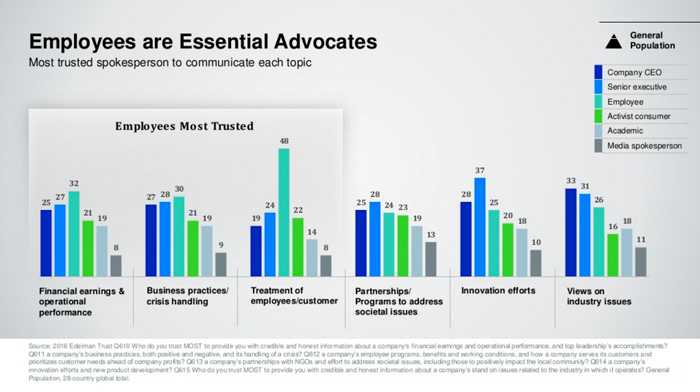
Image via Edelman Insights
When do employees represent, express, becoming living evidence of and talk about your brand? Front-facing staff represent your brand through their interactions with your customers. Non-front facing staff represent your brand when they discuss your company with friends and family and chat about their day on social media. Employees chat amongst themselves about your company — the good, bad and ugly.
Consider this, most of your employees are on social media and are either phenomenal ambassadors for your brand, indifferent workers clocking in time or worse still major detractors undermining your brand reputation.
Related: Top 10 Tips For Managing Your Brand Reputation
The ripple effect and network of influence per employee is extraordinary. It’s up to you to harness this for the greater good with strong internal branding or, through negligence, be at the mercy of come what may. At the very least make brand induction and training integral to what you do so you ensure your team are empowered, feeling and talking positively about your brand. In order for this to occur, your staff need to:
- Express your brand and what it stands for, or aims to stand for — a traditional mission statement won’t cut it because it lacks real-world application
- Identify how their behaviour supports or detracts from the brand
- Synthesise and consequently feel highly motivated to choose the right behaviour for the positive growth of the brand
At its most basic, this is how employees are integral to the internal branding of your company, which sells from the inside and extends to the outside.
Related: Socially Empowered Employees: Are They Key to Building Your Brand Online?
A Common Problem With Internal Branding
The problem is that few leaders understand the need or know how to convince employees of the brand’s “goodness”. Dangerous assumptions including thinking that employees are naturally attached to the brand. This couldn’t be further from the truth.
Related: CEO Brand Leadership: How Vision Drives Brand Growth
Leaders often operate with the mindset that staff are getting paid to do a job and that should be motivation enough. The truth is, if you want a higher performing company, a culture of innovation and growth with increased sales, you have to promote your brand to your employees first through an internal branding strategy, because they are an extension of your brand and take your brand to the outside world.
Related: The Case for Brand Disruption: Be the Disruptor or Be Defeated
The How Of Selling Your Brand From The Inside Out
Going Deeper Than Traditional Vision, Mission and Values
Internal branding is far more than wall hanging statements with the vision, mission and values expostulated on them. If you really want to impact behaviour favourably, you need to develop a culture around your brand vision, mission and values in a relatable, actionable sense so it’s a living expression, on a daily basis, of what you stand for.
Because when a company desires a specific culture that nurtures the positive behaviour of both leadership and employees, it must be carefully developed through brand profiling and brand strategy development. Otherwise, the vision, mission and values end up being superficial nonsense which a best delivers no meaningful or measurable results or worst still undermines the business.
When employees truly buy into your brand vision, mission and values, it drives their behaviour, commitment, performance and sense of fulfilment. In order to achieve this, they need to understand and value how their role in the company fits into and contributes to the overall goals of the business.
Related: Brand Sponsorships, The Best Brand Ambassadors Are Already On Your Payroll
An example of going deeper than a mere superficial listing the company’s vision, mission and values is Teva Pharmaceuticals.
In 1901, three gentlemen started a small wholesale drug distribution centre in Jerusalem.
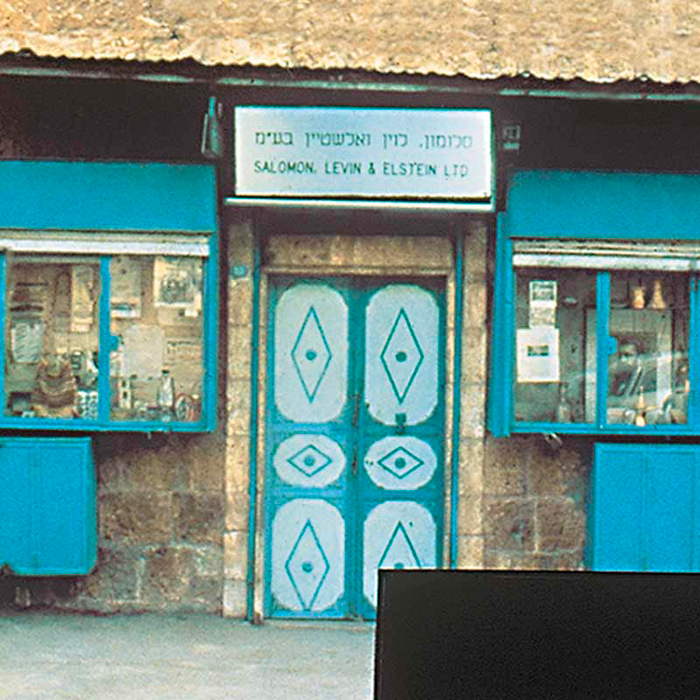
The beginning of what would become Teva Pharmaceuticals in 1901. Image via Teva
Eventually, they moved into drug manufacturing, and between 1980 and 2000, they grew internationally. Today, they are the largest generics pharmaceutical company in the world.
In 2016, with more than 43 000 employees, Teva Pharmaceuticals embarked on a new brand identity strategy[2].
Beck Codner, Group EVP, Corporate Marketing and Communications, said, “Only when we are confident that all our employees are aligned around a shared purpose and how that should be reflected in how we think and how we act, will we be ready to externalise our new brand”.
As part of the new brand strategy, the Teva brand style guide and code of conduct was developed, so that employees would be well informed, empowered and armed with transparent standards to work with and represent the brand.
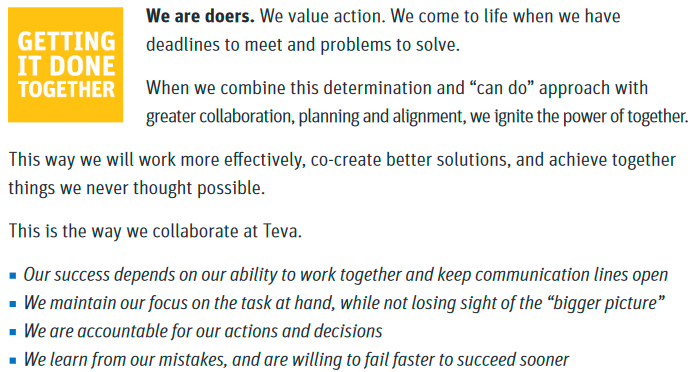
A screenshot of a section of Teva’s new code of conduct, based on their new internal brand strategy. Image Via Teva Pharmaceuticals
Watch Teva’s historical progress:
Focus On Marketing Your Brand Internally First
Whatever brand strategy, marketing or advertising you plan to activate externally, sell it to the inside first, and whatever communication is planned for your external market, customers and stakeholders alike, ensure you inform and induct your leadership team and employees first.
Why bother? Here’s one B2B example for the sake of clarity:
“Before you can do anything to gain success in your business, you’re going to need the buy-in and support of your team. A team is what grows the business. It’s not the technology; it’s not the computers.”
according to Yaniv Masjedi, Vice President of Marketing, Nextiva, a cloud based communication company.[3]
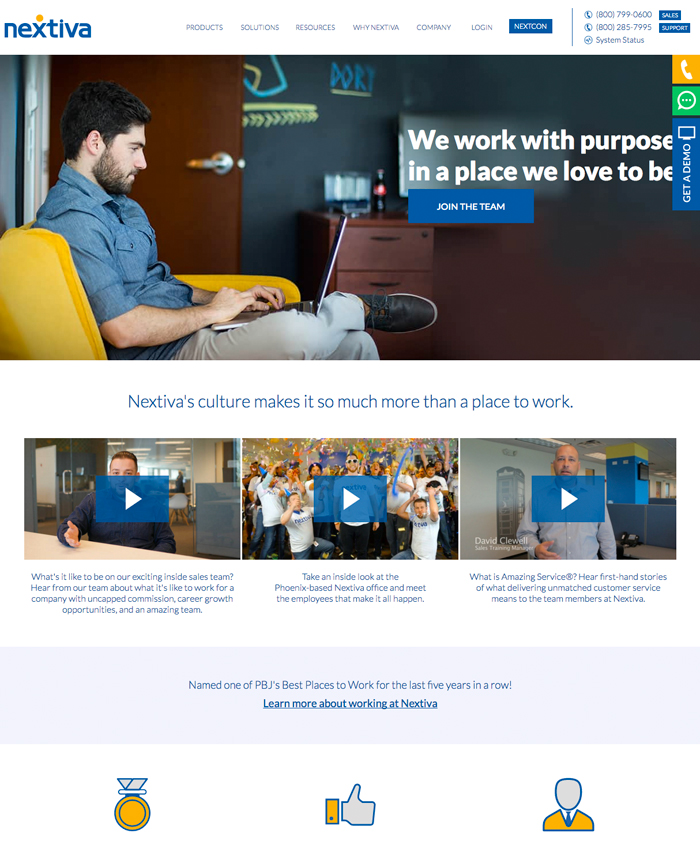
Image via Nextiva
In 2008, when Nextiva just opened its doors with a handful of staff, it was easy to keep people emotionally bonded to each other and the company. As it expanded to 300, with employees situated in other locations and many not knowing the names of fellow colleagues, it became necessary in 2012 to find a way to communicate company news more effectively, without resorting to the old fashioned newsletter.
“NexTV”, a weekly, internal video series was launched. They started small; each week, different employees would gather around a laptop camera to make announcements collected from all departments. Just 2 minutes long, it was uploaded onto YouTube – edit-free – for internal viewing. This killed two birds with one stone, so to speak because people in various locations could see the faces of fellow colleagues, some of whom they had never met, and get the news at the same time.
On average, 74% of Nextiva’s employees watch the series each week, with a 96% engagement rate.
The concept generates office fun and excitement, especially when employees know they’re being featured in the next episode.
Related: The Impact of Company Brand Culture On Driving Performance and Increasing Sales
In 2013, Nextiva started using more sophisticated means of internal communication, but the no-frills laptop camera method certainly achieved its purpose and has become a cornerstone of the company’s brand culture.
An example of one of the NexTV episodes.
Now logically, you’d think to sell change or marketing internally first, is a natural course of action, but for the majority of businesses, it’s not, because its importance is overlooked or forgotten. This is fatal for organisational goals, bottom line performance and sales growth.
Ensure management teams and staff are highly informed, fully engaged and relate to what’s happening before executing strategy externally, and if you make changes, be sure to sell it to them first.
Related: From Zero to Hero; How To Become a Must-Have Brand
Making Your Brand Come Alive for Staff Through Internal Branding
The point of branding – externally as well as internally – is to form an emotional connection with your ideal primary customer. This is why it’s no good simply documenting a dry vision, mission and values statement and filing it away or allowing it to become a wall dust-catcher because that accomplishes nothing. The vision, mission and values have to come alive for every staff member in order to increase performance and sales.
Related: Brand CSR: The Business Case for Successful Branding and Social Good
Staff have to live your brand and feel an emotional connection with it in order to sell it to your ideal customers whether in a formal work capacity or informally through their external life interactions.
Easier said than done; this section alone requires strategic thought: how do you make the brand come alive for your employees?
Firstly, the primary message needs to be introduced and the rationale behind it shared. This must be carefully developed because people are naturally resistant to change. When certain key factors are in place though, it makes the internal brand launch more readily received.
Secondly, the newly refreshed or revitalised brand message needs to be reinforced throughout employee touch points in daily activities. This needs to be strategically planned, just as you would plan a full-on customer marketing strategy.
Questions the brand strategy team needs to consider and plan around are:
- What do employees think of the brand and company?
- What do we want them to think?
- What will convince them of this?
- Why should they believe us?
Once these questions are evaluated and answered, the creation of internal branding collateral can be initiated. You don’t want to convey information, you want to persuade, emotionally engage and motivate. Make it actionable, fun, engaging and interesting.
Related: Brand Renaming: Name and Tagline Change Considerations
The Role of Communication In Internal Branding Strategy
It is often the HR department who execute internal communications when it should be the role of the marketing department who have the skill to market the brand not only to customers but to employees alike.
Communication is key internally, and yet the majority of businesses fail dismally at it.
In the 1980’s, HSBC, one of the largest financial organisations in the world, experienced rapid growth, and as a result, their employees became disconnected amongst themselves, the organisation and its leaders. In addition, the organisation had a traditional top-down approach, which made it just about impossible to obtain feedback from those on the ground. In today’s world, it’s not always an ideal model for a highly innovative, rapidly growing more progressive company which builds with high employee engagement.
The challenge was, how to get 250 000 people in one organisation, to be heard and feel their feedback mattered, and to change the traditional hierarchy?[4]
Enter Exchange Forum; the objective of which was to change the role of management.
Related: Brand Audits – How to Use One to Grow Your Profits
Internally known as the “shut up and listen” project, the forum was kicked off by holding meetings where management needed to “shut up” and listen to what their staff were saying, while saying nothing in return, so that the information would come from the bottom up instead of from the top down, recognizing that employees have opinions and knowledge that would be important to management decisions, especially for strategic changes.
The long term goal is that every employee should attend and participate in at least four “shut up and listen” exchanges each year.
Has the project worked? Take a look at this next video by HSBC titled, “through the eyes of our people”, and then answer this: from this video, does it appear as if employees feel connected now instead of disconnected?
Today, at HSBC, employees feel heard and leaders have learned the value of listening to what their team has to say.
Questions to consider with your internal branding
Is it time to sell your brand more strongly from the inside out? Consider these questions to improve clarity:
- Does your business sell its vision, mission and values to your employees first?
- Is your HR or Marketing department responsible for internal communications and are they integrated — working as a cohesive team?
- Can your staff and leadership articulate what your brand stands for and what makes you different to your competitors?
- Is your brand a living entity with a clear vision underlying at the heart of everything you do? Do your staff know how to incorporate the vision into their daily tasks?
Want to develop your internal branding strategy so you can build your team into your high performing brand champions but you’re not sure where to start to get a successful return on your investment?
Just drop us a line to [email protected] or give us a call T: +353 1 8322724 (GMT 9:00 – 17:00) — we’re here to help.
If you want direction and support transforming your internal branding strategy so it empowers your team and increases sales then the Persona Brand Building Blueprint™ Mastermind is the perfect fit for you.
This is a two-day brand building intensive shared with a small group of like-minded peers where you work on your brand with our leadership. In fact, over the two days, you reevaluate your brand, codify it and create your brand strategy from the ground up whether you’re revitalising an existing brand or creating a new one.
This is a highly empowering workshop where we take a deep dive, step-by-step into how to build a brand. You discover and apply the systems and methodologies used by some of the world’s greatest brands as you work on your brand under Lorraine Carter’s direction and tutelage so you can grow your own brand and business.
This is not a theory based program but a highly interactive fast-track course where you work intensively on your brand throughout the programme duration using our ten step system to:
- Completely re-evaluate your brand to make it much stronger so it’s highly visible enabling you to increase your profits
- Map out your brand in full so it’s codified and comprehensively documented to grow your business faster
- You leave with your total brand road map or GPS of your brand empowering you to manage your brand, stand out and attract your ideal customers so you multiply your sales
Outcome:
Your brand transformed so you can increase sales.
At the end of the two-day Persona Brand Building Blueprint™ Mastermind you leave with your fully documented brand strategy ready for implementation in your business or organisation.
If your team is larger and you’d like to include everyone’s’ participation in the Persona Brand Building Blueprint™ Mastermind then we also run in-house private client brand building intensive programmes too.
Ring us to discuss your brand building preferences
Just drop us a line to [email protected] or give us a call T: +353 1 8322724 (GMT 9:00 – 17:00) to discuss your preferences and we’ll develop your brand building intensive bespoke to your particular brand requirements so that you’re empowered to develop and lead your internal brand building team.
[1] https://www.brazen.com/blog/archive/uncategorized/2-million-people-apply-work-google-year-heres/
[2] http://www.tevapharm.com/news/teva_pharmaceuticals_embarks_on_strategic_corporate_identity_program_to_build_a_global_brand_02_16.aspx
[3] https://www.marketingsherpa.com/article/case-study/internal-marketing-b2b-video
[4] http://www.gatehouse.co.uk/the-employee-communication-revolution-ripping-up-the-rule-book-at-hsbc/
CEO Brand Leadership: How Vision Drives Brand Growth
/0 Comments/in Brand Culture, Brand Leadership, Brand Strategy, Customer Service, Entrepreneur /by Lorraine CarterIn shaping a brand, CEO brand leadership plays a critical role as the visionary behind the brand. Leaders with vision are aspirational; they stretch the imagination and they look to the future. They understand that a vision is not just a statement; it’s a process. It’s alive. It changes as the world presents new opportunities. True leaders embody and define a brand vision and culture, which must be shared and cultivated to exist.
It’s worthwhile examining lessons from three of the most influential, visionary, and successful CEOs of our times:
- Jeff Bezos continues to break records leading the fastest-growing company in world history.
Image via Amazon
- Steve Jobs developed the first personal computer and laid the foundation for the world’s highest-valued company.

Image via Apple
- Bill Gates, the world’s wealthiest individual, built the world’s first software company and is now running the world’s largest private charitable foundation.[1]

Image via Microsoft
Not all visionary CEOs are corporate giants, of course. Sectors such as nonprofits, services, and even political parties also require leaders with exemplary vision. And it’s not uncommon for entrepreneurs and startups to be guided by a founder whose passion results from personal experience that is shaped into a brand vision.
Related: CEO Brand Leadership – How Does Your Leadership Impact Your Brand?
Visionary Branding: CEO Brand Leadership Must See Tomorrow
Regardless, in all cases it is the CEO’s responsibility to own the vision, to effectively communicate the vision, to provide the resources to deliver the vision, to authentically support the vision, to engage in dialogue with stakeholders, and to continually refresh and drive the brand vision.
Branding that reflects a vision is key to a company’s long-term survival and market leadership and success. It may be time for you shape your brand strategy to rebrand, refresh or relaunch. Talk to us about taking the next step to re-shape your vision and align your branding to ensure its long term health and growth. |
Related: A Rebranding Strategy Guide for Brand Owners and Managers
Strong Brand Culture: Shaped by The CEO’s Brand Leadership Vision
It’s well known in Silicon Valley circles that in the months leading up to Facebook’s IPO in 2012, a slogan was painted on the wall at headquarters proclaiming, “Done is better than perfect.” That underscores the company culture in a brand that didn’t exist before 2004. Now Facebook has over 1.86 billion monthly active users run by a 32-year-old founder and CEO who ranks as the world’s fifth wealthiest individual.[2]
Related: 10 Branding Tips From Silicon Valley on How to be a Successful Startup Brand
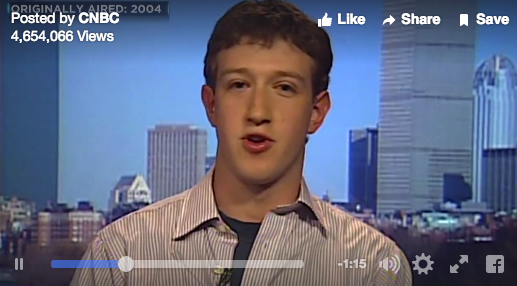
“When we first launched we were hoping for maybe 400 or 500 people…so who knows where we’re going next?” a 19-year-old Mark Zuckerberg told CNBC about his new college social networking site that had achieved 100,000 users in 2004. “Maybe we can make something cool.”
While the words “company culture” are bandied about quite a bit, one Melbourne-based international consultant cuts through the jargon to explain the concept succinctly. “For example, if it is 5 o’clock and you are walking out the door and the phone rings – if you care about the goals of the business you will pick up that call.”[3]
That level of employee care, explains Didier Elzinga, CEO of Culture Amp, has its roots in the leadership. While the CEO cannot sit in on every meeting, corporate culture is intrinsically linked to leadership and trust.
Companies and workers either have it or they don’t, says Elzinga, after studying 600 firms representing more than two million employees.
Ultimately, successful leaders shape their company culture, they do not allow the company to shape their vision. Modern business analyses indicate that “the way things work around here” is driven day-to-day from the top, deeply embedded in processes, reward systems, and behaviors.[4]
Related: What’s a Cult Lifestyle Brand and How do You Create One?
As a case in point, we only need to look to the headlines following events of April 2017, when United Airlines’ CEO made a reportedly bad situation infinitely worse by publicly doubling down on company culture, citing terms and conditions instead of responding with sincere apologies. “I’ve learned,” says Oscar Munoz, about what he refers to as his “shame and embarrassment.”
Brand Survival: CEOs Must Keep the Ship Afloat
In the influential bestseller, “The Innovator’s Dilemma: When New Technologies Cause Great Firms to Fail,” author Clayton M. Christensen noted that companies must consistently disrupt their existing product lineup with “the next new thing” in each of the categories in which they compete.[5]
Related: The Power of Disruptor Brands and Challenger Brands
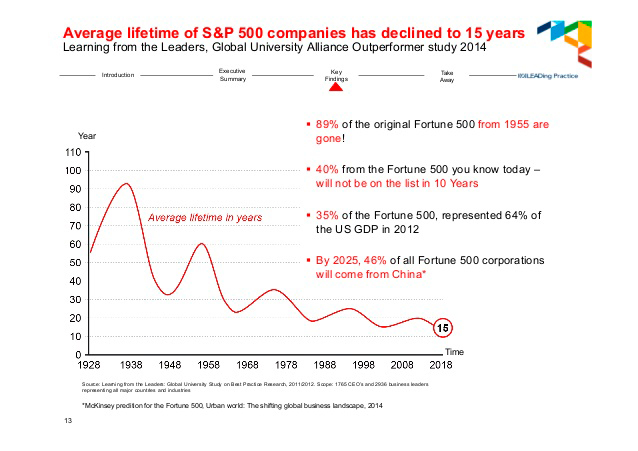
To ensure survival, a CEO must see tomorrow and infuse (and re-infuse) the brand with an evolving vision. Today, this is even more critical than when Christensen’s book was first published in 1997. Astonishingly, the average life expectancy of a Fortune 500 company has declined from around 75 years half a century ago to less than 15 years today…and it is declining all the time.[6]
Brand Vision: When the CEO is Customer-Centric
Amazon, Apple, Microsoft: Dedication to a superior customer experience is the thread shared by extraordinary leaders like Jobs, Bezos, and Gates.
Jeff Bezos founded Amazon.com to be the “Earth’s Most Customer-Centric Company.” When in 2005, CustomerThink awarded the internet giant with a customer-centric leadership award, Amazon responded with, “It is simply in our DNA to approach our business by starting with the customer and working backward, and for the past 10 years we have stayed laser-focused on this core principle.”[7]
Bezos says you can have one of 4 primary business focuses:
1. Competitor focus
2. Product focus
3. Business model focus
4. Customer focus
In Bezos’ view, constant customer focus yields the best returns and it’s fundamental to his brand vision and the whole Amazon brand culture. Because customers are endlessly dissatisfied, a company that obsesses about its customers happiness is constantly lifting the bar on the quality of the experience and inventing new ways to please. Together, these actions lead to superior results.
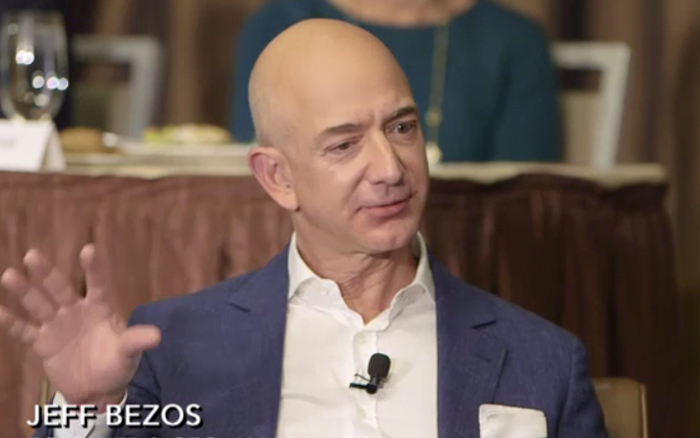
Image via CharlieRose.com
Early Amazon employees could tell you about the empty chair at the conference table, placed there to represent the customer, “the most important person in the room,” according to Bezos. “The thing that connects everything that Amazon does is customer obsession,” Bezos explained in a 2016 interview,[8] recalling that Amazon used to only sell books and he drove the packages to the post office himself. With a net wealth of $75.6 billion, he may have a point.
Related: Top 10 Brands for Customer Experience and What You Can Learn From Them
On his return to Apple 12 years after being fired, speaking at a Worldwide Developers Conference in 1997, Steve Jobs defined what he called “the right path” for his strategy and vision. “What incredible benefits can we bring to the customer? Where can we take the customer? It’s not starting with let’s sit down with the engineers and figure out what awesome technology we have and then how can we market that.”[9]

Image via Wikimedia Commons
Throughout his lifetime, this customer-centric approach remained at the heart of Jobs’ laser focus on every detail, in all the touchpoints and design elements of Apple’s products, including even internal ones that cannot be seen.
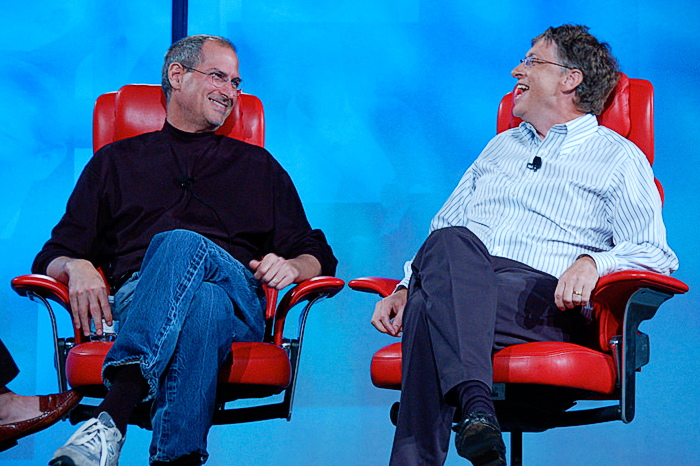
Steve Jobs and Bill Gates (David Geller, flickr 2.0)
Bill Gates on Steve Jobs, “He knew about brand in a very positive sense; he had an intuitive sense for marketing that was amazing.”[10]
And while happy customers are the goal, Bill Gates has commented on his own leadership at Microsoft, “Your most unhappy customers are your greatest source of learning.”[11]
Brand Success: CEO Brand Leadership Vision For an SME
The most important CEO function in a small-to-medium sized business is setting strategy and vision says Rushika Bhatia, Editor of SME Advisor magazine. “Lots of people can help the senior management team develop strategy. Lots more – including the investors and shareholders – can approve a business plan. Yet the actual direction, destination and market positioning can only be set by one person: the CEO.”[12]
In Silicon Valley, venture capitalist Ben Horowitz of Andreessen Horowitz is a startup expert who echoes this view. “The story of the company goes beyond quarterly or annual goals and gets to the hardcore question of why? Why should I join this company? Why should I be excited to work here? Why should I buy your product? Why should I invest in the company? Why is the world better off as a result of this company’s existence? Some employees make products, some make sales; the CEO makes visionary decisions.”[13]
Due to the smaller size of a startup or SME, a CEO is closer to internal functions, all stakeholders, and ultimately, customer experiences. At small-to-medium sized businesses, leaders have greater opportunity for direct control of the organizational climate and brand culture, hence interaction for delivering the vision. CEO advocates of the ‘customer first’ approach can directly influence that vision as the head of an SME.
If you want in-person professional direction to re-evaluate your brand or clarity on how to articulate what your brand stands for so you can sell more effectively and would like to explore working with us then drop us a line to [email protected] or give us a call T: +353 1 8322724 (GMT). We’d be delighted to talk with you.
Alternatively you can also build your brand yourself using our Personality Profile Performer™ programme so you can identify what makes it really different, distinctive and memorable to standout. This is a step-by-step brand building programme, complete with downloads, questionnaires and checklists, to help you build your brand. You can watch a section of the programme here.
Building a Brand From Scratch: An Innovative Ice Cream Story
In 2007, Robyn Sue FIsher had an MBA from Stanford University, no money, and a passion for ice cream. She started selling her Smitten Ice Cream brand on the streets of San Francisco from a Radio Flyer wagon to transport her innovative machinery.
As CEO, she now has three patents on a liquid nitrogen machine, 10 Smitten stores across California and 200 employees. The vision was to produce the best-tasting, wholesome, handmade ice cream from scratch, one scoop at a time, from all natural ingredients, using technology to get old-fashioned flavours.
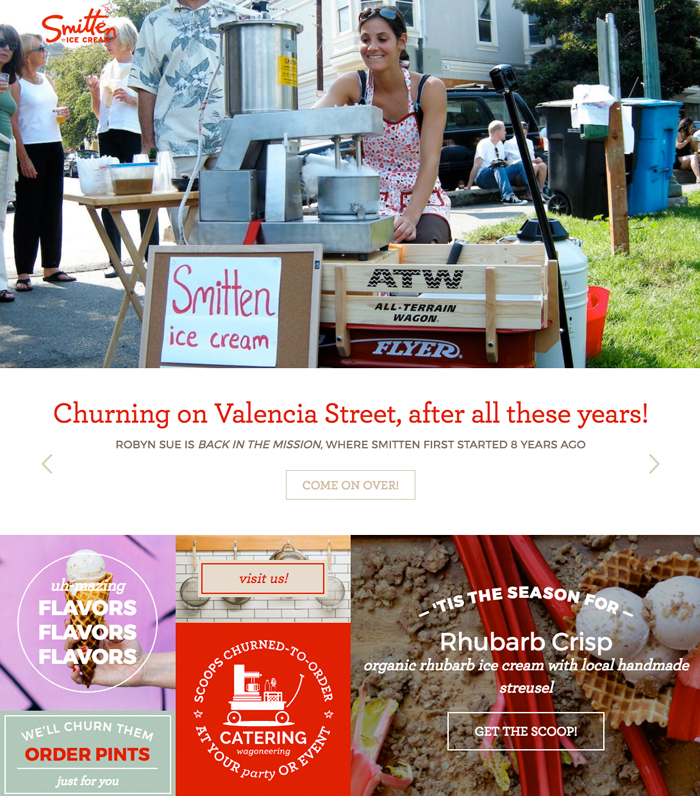
Image via Smitten Ice Cream
In a podcast interview, Robyn says, “I get closer and closer to our amazing people as we grow. A lot of the things that make me sit behind a computer, which is not what I signed up for, can be handed off to people who can do them better than me so I can actually build our culture and be in charge of innovation. Growth enables me to shine and everyone else to take ownership and help steer the company.”[14]
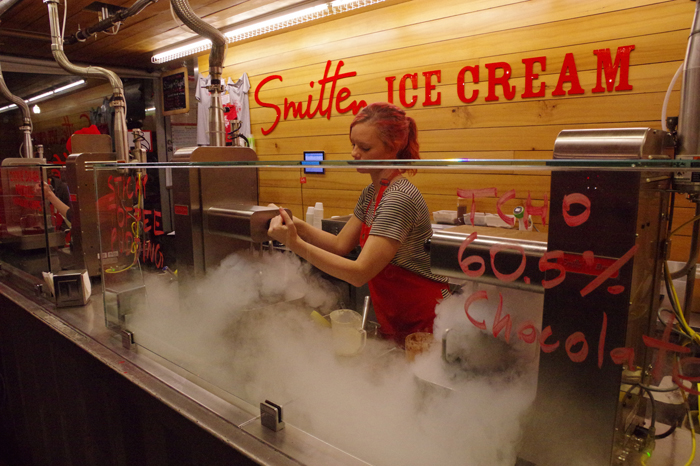
Image via Smitten Ice Cream
Brand Loyalty and Longevity: A Natural Health and Wellness Story
Just one mile from Harvard Square, a husband-and-wife team started a natural health and wellness specialist store after graduating from college in 1974, and have been running Cambridge Naturals ever since. Co-founder Michael Kanter carries the title Chief Visionary Officer, embracing a belief “that strong employees are absolutely vital to a thriving business, and that improving our employees’ standard of living will in turn help our business to grow and prosper.” Leading by example, he has raised the business’ starting hourly pay to considerably above minimum wage plus 100% medical and dental benefits for full-time staff.[15]
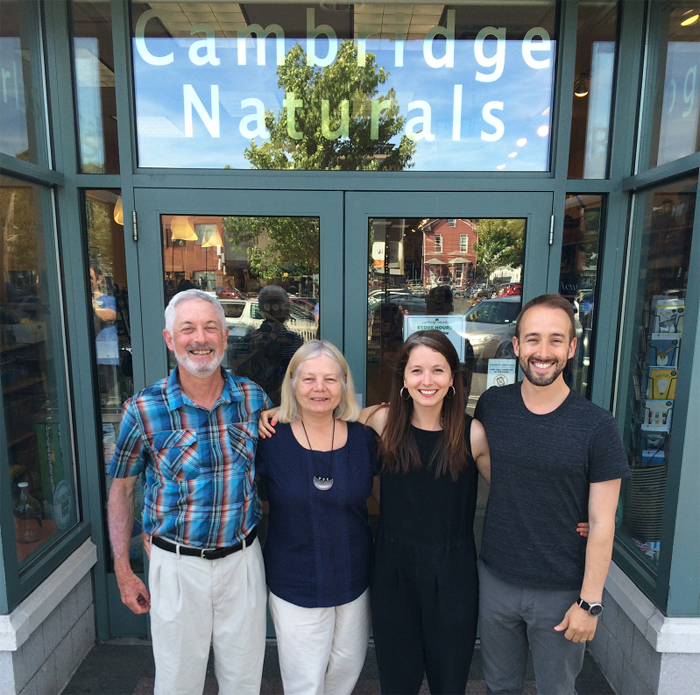
Cambridge Naturals: Family business, Michael Kanter and Elizabeth Stagl with daughter Emily Kanter and son-in-law Caleb Dean
A founding member of Cambridge Local First, Michael has been actively involved in both federal and state campaigns to raise the minimum wage, hosting former Secretary of Labor Thomas Perez in 2014 for a local business roundtable on the impact of wages on employee and business health and success and writing about it for the U.S. Department of Labour Blog.[16]
Image via Cambridge Naturals
Michael’s vision extends to consulting for other natural products businesses and speaking at industry trade events about the rewards and the struggles of running a locally-owned, community-oriented business.
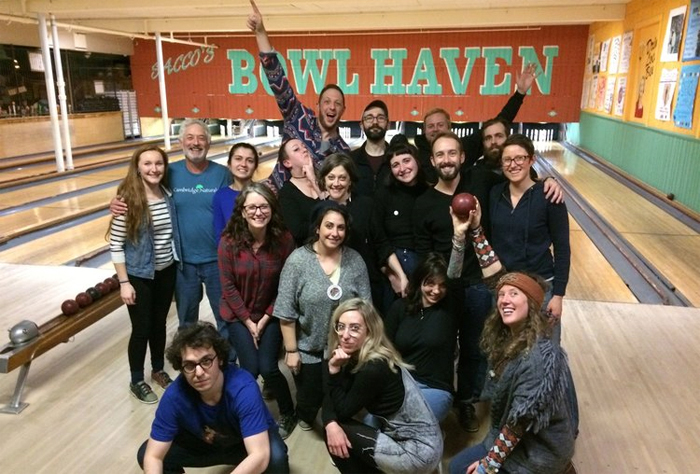
Cambridge Naturals: Company Outing
Ultimate Brand: When the CEO is the Brand
In a family business, a small-to-midsized business, a larger firm, or even an entire nation, a founder and/or CEO’s persona can permeate the brand. Such a personification of brand vision can resonate far more deeply than a logo ever will, a tagline, or an advertising campaign. And it can be kept alive through generations. According to the U.S. Bureau of the Census, about 90 percent of American businesses are family-owned or controlled.[17]
Related: Family Business Branding and The Secret Drivers to Brand Success
Personal infusion or identity crossover can generate iconic status for the brand. Well-known examples of founders and CEOs who have personally underscored brand strength include Henry Ford of Ford Motor Company, innovator Walt Disney of the Disney Company, and entrepreneur Richard Branson, founder of Virgin Group.
The strength of vision from these three futurist dreamers has changed the world. Listen to Walt Disney’s daughter on the emerging vision of her father from the drawing board to Disneyland theme parks for children of all ages.

Image via Walt Disney
Hear Sir Richard Branson connect the dots between airplanes and his vision for space travel by millions of earth dwellers.
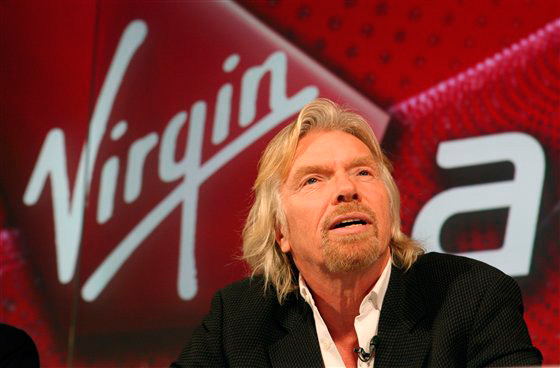
Image via Virgin
An elected head of state is perhaps the best example to most starkly illustrate how a leader’s personal stamp critically shapes a brand, in this case, the brand of a country.
Related: What Brands Can Learn From Political Campaigns
Think of the president of the United States or the prime minister of the United Kingdom, for example, as a CEO. This individual embodies and defines the vision for the national brand — including its perception at home and globally — with massive implications based upon their own individual vision.
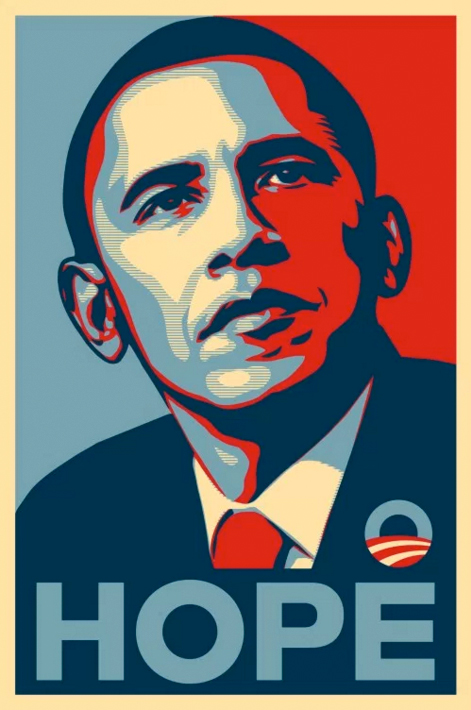
Image via Wikimedia Commons
When you realise that 60% of branding is about perception and only 40% about all the more tangible stuff, be that product or service, then the power of branding really hits home.
Are you a visionary CEO and have you considered?
- Do you feel confident expressing your brand vision succinctly and authentically — what your brand stands for?
- What are the leadership principles you most admire and who embodies them best?
- Do you both ‘talk the talk’ and ‘walk the walk’ as the visionary behind your brand and the face of your brand?
- How does your brand vision continually adapt to changing times?
- How well do you communicate your brand vision to all stakeholders? Can you clearly articulate what makes your brand different compared to your competitors — in terms that are compelling to both customers and stakeholders alike.
- Does your vision feel fresh and futuristic or is your brand ripe for a refresh?
If you need direction and support giving your brand a health check or brand revitalisation feel free to get in touch [email protected] or give us a ring T: +353 1 8322724 (GMT hours).
Alternatively you can also give your brand a health check yourself to identify its strengths, weakness and areas for potential innovation and growth using our Auditing Analysis Accelerator™ programme. This is a step-by-step walk through, complete with downloads, questionnaires and checklists, to help you audit your brand. You can watch a section of the programme here.

Start auditing your brand here
[1] https://www.forbes.com/billionaires/list/2/#version:static
[2] https://www.forbes.com/billionaires/list/2/#version:static
[3] https://www.siliconrepublic.com/jobs/cultureamp-ceo-brand-promise-culture-deliver
[4] https://dupress.deloitte.com/dup-us-en/focus/human-capital-trends/2016/impact-of-culture-on-business-strategy.html
[5] http://changethis.com/manifesto/149.04.LongTermGrowth/pdf/149.04.LongTermGrowth.pdf
[6] https://www.aei.org/publication/fortune-500-firms-in-1955-vs-2014-89-are-gone-and-were-all-better-off-because-of-that-dynamic-creative-destruction
[7] https://www.entrepreneur.com/article/234254
[8] https://charlierose.com/videos/29412
[9] https://www.youtube.com/watch?v=FF-tKLISfPE
[10] http://www.cbsnews.com/news/bill-gates-on-steve-jobs-we-grew-up-together
[11] https://www.surveymonkey.com/blog/2015/02/13/10-inspiring-customer-satisfaction-quotes-and-the-stories-behind-them
[12] http://smeadvisor.com/featured/leading-from-the-front-role-of-the-ceo
[13] https://a16z.com/2010/05/31/how-andreessen-horowitz-evaluates-ceos
[14] http://www.thebigleapshow.com/robyn-sue-fisher
[15] https://static1.squarespace.com/static/5366ed3ee4b0b47b799380bb/t/58500c0920099e4b52133b17/1481640969656/CNPressReleaseDec13+-+FINAL.pdf
[16] https://blog.dol.gov/2017/01/03/why-one-family-owned-business-decided-to-raisethewage
[17] https://www.inc.com/encyclopedia/family-owned-businesses.html
How to Transform Your Brand and Increase Your Sales
/0 Comments/in Brand Differentiation, Brand Leadership, Brand Personality, Brand Positioning, Brand Profiling & Positioning, Brand Revitalisation, Brand Strategy, Branding, Branding Bootcamp, Branding Masterclass, Branding Mastermind, Branding Workshop, Business, Rebrand, Rebranding /by Lorraine CarterWant to Build Your Brand? Lorraine Carter Speaking at Bucharest Tech Week
/0 Comments/in Brand Leadership, Brand Loyalty, Brand Strategy, Branding, Business, Keynote Speaker /by Lorraine CarterAre you launching a new brand to market or considering rebranding but you’re not sure where to start to ensure a profitable return on your investment?
Have you got a really fantastic product or service but you’re struggling with how to clearly articulate what your brand stands for and what makes it really different to your competitors?
Are you being dragged into a price war or discounting where only those with the deepest pockets can win?

Perhaps you’re actually unconsciously sabotaging your own brand building efforts because you simple don’t know enough about how to build a successful brand?
Join me at Bucharest Technology Week, 26th May 2016 together with Ozana Giusca and Lilia Severina to discover how to build your brand so you can create obsessive desire for your products or services, become a highly recognised household name and increase your profits.
I’ll be sharing success generating action plans that you can take away and implement immediately:
• How successful brands and branding works
• How to make your brand standout and create fanatical desire amongst your primary audience so you become the No.1 preferred choice
• How to leverage your product or service brand so you sell more with HIGHER profit margins
• The top 10 professional insider secrets to how and why successful branding works to generate greatest profit
• The 3 most costly mistakes the majority of small business owners and entrepreneurs make when trying to build their brand — and how to avoid them
• The 10 step process to building a highly recognised and profitable brand — whether you’re revitalising an existing brand or launching a new brand to market
• Why your current approach to your branding is not producing the results you expect
• The critical brand strategy factors required to be successful in today’s highly competitive economy — local, national or global
• How to connect with your core target audience in a way that gives them a compelling reason to choose and buy your brand instead of your competitors repeatedly
Want to know more?
The Power of Disruptor Brands and Challenger Brands
/0 Comments/in Brand Differentiation, Brand Leadership, Brand Personality, Brand Profiling & Positioning, Brand Story, Brand Strategy, Branding, Challenger Brands, Corporate Social Responsibility, Disruptor Brands, Entrepreneur, Innovation, Storytelling /by Lorraine CarterThese days, it’s all about disruption. In tiny Davos, Switzerland, “The Fourth Industrial Revolution” was the central theme of the 2016 World Economic Forum, designed to engage thought leaders to prepare us for the “next big thing.”
The proposition is that we are on the cusp of a new era fundamentally changing the way we work and live. Vast technological changes brought on by digitalization are disrupting conventional business practices and social norms, states the economic forum founder, Professor Klaus Schwab, in his essay published by the Council on Foreign Affairs.[1]

Image via www.weforum.org
Enter Innovator Brands
A 2015 survey by Brand Keys on behalf of Business Performance Innovation (BPI) Network indicates that household brand names are being replaced by innovative game changers, and they’re gaining respect with mainstream consumers. “Nimble startups compete with legacy enterprises,” say 98 percent of those asked and “the disruption is severe,” indicate 37 percent. Furthermore, there is a “distinct correlation” between perceived innovation and a company’s bottom line results, according to the study.[2]

Image via www.bpinetwork.org
Challenger Versus Disruptor Brands
The terms challenger brand and disruptor brand are not interchangeable. Challenger brands bring innovation, enhancements, new pricing, or other tweaks (diet soda, dishwasher tablets, boy and girl nappies) to an existing marketplace.
Disruptors enter a marketplace and completely set heads spinning. When eBay appeared, for example, it was difficult for many people to accept paying online in advance for an item from a stranger and simply trusting it would arrive in the post. When email gained traction, traditional mail service was rattled and companies were required to re-define legalities in their terms and conditions. And when Airbnb was introduced, the hotel industry was more than mildly shocked; cities are still attempting to define tax issues.

Image via www.preweek.com
A Shift to the Customer Interface
The battle for today’s customer is occurring in the digital interface between product and consumer. As Tom Goodwin, senior vice president of strategy and innovation at Havas Media, explains, “Uber, the world’s largest taxi company, owns no vehicles. Facebook, the world’s most popular media owner, creates no content. Alibaba, the most valuable retailer, has no inventory. And Airbnb, the world’s largest accommodation provider, owns no real estate. Something interesting is happening.”[3]

Image via www.reddit.com
These companies fill a connector space between product and people. These brands are the jam in the sandwich between the customer and the business. Furthermore, Goodwin points out that this new breed of interface companies (Uber, YouTube, Airbnb, Snapchat, Twitter, WhatsApp, Facebook, Google) are the fastest-growing in history. All of them began as challenger brands.
What is a Challenger Brand?
From the original biblical tale, best-selling author Malcolm Gladwell borrows a title, “David and Goliath: Underdogs, Misfits, and the Art of Battling Giants,” reminding us that compelling storytelling has long been at the heart of a challenge. In brand marketing today, some famous challenges fall into the hero/underdog sort (Coke vs. Pepsi, Avis vs. Hertz; McDonalds vs. Burger King); others make into it a three-way contest, or even a Big Four fight (Tesco, ASDA, Sainsbury, Morrison’s).
Still other challenger brands enter a crowded category or endeavour to maintain challenger momentum once it starts to fade. Enter the game changers, disrupting the status quo by creating altogether new categories (Match.com, Uber, Airbnb), thus far a hallmark of 21st century disruptor brands.
In discussing the rise of the challenger brand, CMO of Adobe points out, “Essentially, the heart of a challenger brand is the passion, process, and tools they use to create and magnify customer advocacy.” Reflect on those overnight queues snaking around the Apple Store in anticipation of new product releases. “The heart of challenger brands’ success is their ability to turn emotion and affinity into a customer acquisition machine.”[4]
Purpose = Purchase = Profitability

Image via Rob DiCaterino, Flickr CC2.0
Challenger brand experts Adam Morgan and Mark Holden wrote a book on the subject, “Overthrow: Ten Ways to Tell a Challenger Story,” (with all profits going to UNICEF). In it, they list 10 types that represent the challenger brand state-of-mind. These brief descriptions may help you evaluate and identify your own brand’s personality, purpose and positioning.
The Irreverent Maverick
Shock and awe counts more than playing by the rules. This challenger type is big on attitude and best have a big budget for flashy PR, interactive sales tactics and legal advisors. Think Red Bull.
The Missionary
The core message is critical for this brand which identifies a need to do something better. The authors suggest. “Think of Al-Jazeera looking to ‘redress the balance’ in media coverage of the Middle East.
The Next Generation
Daring to call out the market leader as being old fashioned, this challenger seeks to position itself as very much here and now, totally relevant to today’s cultural trends. Emirates Airline, Euro Star and GoPro are examples.
The Democratiser
Sharing great design, catwalk looks and labels is the function of this challenger brand. Often seen in retailing, the purpose is to challenge elitist brands. The right influencers are often part of the equation to deliver street cred. Think H&M.
The Real and Human Challenger
Using people as a company resource, this brand breathes life into a dead category, fires up consumers’ imaginations. In the UK, Innocent (little tasty drinks), are those guys who drive around in those cow camouflage vehicles or Hungry Grassy Vans.
The Enlightened Zagger
Less fashionable is fine for brands that swim against the tide and challenge conventional wisdom. A brand challenge from Camper shoes mixed it up by suggesting that we walk, rather than run.
The Visionary
Big, bold and beautiful is the vision — but never boring. A visionary challenge brings a higher purpose and an emotional connection to the brand, Lady Gaga comes to mind.
The Game Changer
An entry into a category that’s unlike anything consumers have seen before is a game changer. The designers think outside the box. Steve Jobs brought game changers to categories from personal computing to phones, cameras and music.
The People’s Champion
This brand’s founder/CEO may act as the people’s champion, suggesting the public suffers an inferior service or product from everyone else in a category. The people’s champion puts a friendly face to the shakeup, using humour like Virgin boss Sir Richard Branson.
The Feisty Underdog
Here’s the David versus Goliath story in all its storytelling glory. It’s us versus them in the style of Avis Car Rental which adopted the slogan “We try harder. We’re #2,” a unique tagline that garnered empathy during its 50-year run.
Examples of Successful Challenger Brands
What do eggless mayonnaise, furniture in a box, bagless vacuum cleaners and fashionable spectacles have in common with driverless electric cars and return rockets for colonizing Mars? From aspirational to mainstream and from ideation to manufacture, challenger brands can change the world. Once a brand does achieve commercial success, a new set of opportunities comes into play in order to stay fresh edgy, and relevant, maintaining a challenger brand mentality as a bigger brand player.
1. Hampton Creek
Josh Tetrick, founder of this plant-based food maker, believes that industrialized egg and meat production is unsustainable. Hamptons Creek’s leading product, Just Mayo, is an egg-free spread that’s about making foods with less water, land, and carbon emissions. This is a brand that proves the business case for CSR and social responsibility.

Image via www.hamptoncreek.com
Since 2011, Tetrick has attracted funding from 12 billionaire investors, including Bill Gates, and shot to the top of several lists of innovative companies shaping the future of food.[5] The Guardian reports that Silicon Valley investors are pouring “serious cash into ersatz animal products. Their goal is to transform the food system the same way Apple changed how we use phones, or Google changed the way we find information.”[6]
2. IKEA
With 373 stores in 47 countries, no one would call Ikea a small company. Yet, it was born as a challenger concept in the back woods of Sweden in the 1940s: inexpensive flat-packed furniture for self-assembly, sold via a catalogue and warehouse showroom.[7] By remaining functional, simple, and design-led, Ikea has managed a harmonious marriage built on durable pillars of inexpensive, yet decent quality. Partnering with UNICEF among three dozen other NGOs and IGOs, IKEA Foundation[8] is considered the world’s largest charitable foundation, with an estimated net worth of $36 billion.

Image via www.ikeafoundation.org
3. Warby Parker
Four business school grads asked: Why is eyewear so costly? With US $2,500 in seed money from their university, they founded Warby Parker[9] in 2010, shaking up the supply chain dominated by one company. The challenger brand designs and manufactures fashionable spectacles in-house and provides eyewear via its innovative e-commerce site. The Home Try-On program comes with a free no-questions-asked return policy at a fraction of the price. For every pair of eyeglasses that’s sold, Warby Parker donates the funds to donate one pair to charity, currently over one million pairs of glasses.[10] CSR or Corporate Social Responsibility sits at the heart of this very compelling brand. The company is currently valued at US $1.2 billion.
4. Dyson
A few years ago, nobody (except James Dyson) imagined a vacuum cleaner without a vacuum cleaner bag that could operate by centrifugal force. Dyson worked for five years experimenting on 5,179 prototypes before taking a product to the marketplace. With research and design at its core, Dyson machines now include hand dryers, lighting and air treatments that are available in 65 countries. More than 1,000 engineers continually work on inventions.[11] The James Dyson Foundation sponsors design engineering students with scholarships and awards in the UK, USA and Japan.[12]

Image via www.jamesdysonfoundation.co.uk
5. Tesla Motors
Inventor, engineer and investor, self-made billionaire Elon Musk has a stable of disruptive products across multiple industries. From artificial intelligence to solar power to reusable rockets for space exploration, Tesla Motors electric cars are Musk’s best-known challenger brand. His entire stable of companies exist to contribute to Musk’s overarching vision: protecting Earth and humankind via sustainable energy sources and reducing the risk of human extinction by becoming a multi-planetary species. “Really pay attention to negative feedback,” is one of this entrepreneur’s top tips. Next up? “I really want to go to Mars,” says Musk, “It’s a fixer-upper of a planet.”[13]
A View from the Challenger Brand Grave
No stranger to failure, Steve Jobs said in his 2005 Stanford University commencement speech, “You have to trust in something — your gut, destiny, life, karma, whatever. This approach has never let me down, and it has made all the difference in my life.”[14]
And for challenger brands which do reach their goal, they must innovate, innovate, innovate. Success has a great way of dulling the keen edge of ambition; challenger brands can reach a comfort zone of complacency and constant change is the only answer.
Questions to consider
• Are you clear on the differences between a challenger brand and the need for a rebranding?
• Is your brand focused on a well-defined purpose?
• Have you figured out what you’re challenging and crafted a story that explains why?
• Do you have a fresh, imaginative, and stimulating idea, product or service, that you’re now ready to develop using brand profiling which provides your roadmap for bringing it life — making it distinctive, different and memorable so your primary audience can’t resist it?
• Do you have the ambitious challenger brand mentality? Are you a risk-taker at heart?
• Does your challenger brand represent a positive value for consumers?
• Do you have the conviction that your brand is something that will leave the world better off? Are you ready to leave an amazing legacy that changes peoples’ lives, and makes them better forever?
You may also like:
Brand Profiling: How Brand Performance and Purpose are Inextricably Linked
Rebranding Strategy: Why Your Rebrand Must Embrace Storytelling
The Profit Power of Cult Brands, Why and How to Create One
Brand Profiling: How to Use Emotion to Make Your Brand More Profitable
Brand Audits: 10 Things Successful Brand Owners and Managers Must Know
Brand Revitalisation and Relaunch: The do’s and don’ts of doing it successfully!
Brand CSR: The Business Case for Successful Branding and Social Good
Co-Branding: 13 Tips for Growing Your Brand Through Strategic Partnerships
[1] https://www.foreignaffairs.com/articles/2015-12-12/fourth-industrial-revolution
[2] http://www.bpinetwork.org/thought-leadership/views-commentary/395/new_digital_disruptors_that_gratify_and_excite_consumers_eclipse_tech_brand_incumbents_in_innovation_rankings
[3] http://techcrunch.com/2015/03/03/in-the-age-of-disintermediation-the-battle-is-all-for-the-customer-interface/#.wp0rsdo:0sCd
[4] http://www.cmo.com/articles/2013/12/3/rise_of_the_challeng.html
[5] https://www.facebook.com/hamptoncreek/info/?tab=page_info
[6] https://www.theguardian.com/science/2014/feb/14/silicon-valley-hack-food-industry
[7] http://www.ikea.com/ms/en_GB/about_ikea/our_business_idea/index.html
[8] http://www.ikeafoundation.org
[9] https://www.warbyparker.com/history
[10] https://www.warbyparker.com/buy-a-pair-give-a-pair
[11] http://www.dyson.com/community/aboutdyson.aspx
[12] http://www.jamesdysonfoundation.com
[13] https://www.youtube.com/watch?v=gV6hP9wpMW8
[14] http://news.stanford.edu/news/2005/june15/jobs-061505.html
Brand CSR: The Business Case for Successful Branding and Social Good
/0 Comments/in Brand Champions, Brand Collateral, Brand Differentiation, Brand Experience, Brand Leadership, Brand Loyalty, Brand Profiling & Positioning, Brand Promise, Brand Relevance, Brand Reputation, Brand Strategy, Brand Values, Branding, Business, Cause Marketing, Corporate Social Responsibility, Millennial Branding /by Lorraine CarterAccording to a Nielsen poll of consumers in 60 countries, 55 percent of purchasers are willing to pay more for products and services from companies that do their part to encourage positive social and environmental impacts.[1]
Clearly, corporate social responsibility influences buying preferences, but how else is it important? We’ll examine the answer to that question below.

Image via www.huffpost.com
What is Corporate Social Responsibility?
Corporate Social Responsibility, or CSR, occurs when companies take into account the sociological, financial and environmental impacts its actions have in the world and decides to ensure its actions make a positive impact. [2].
Some business experts have simplified the definition of CSR even further to suggest it encompasses everything a company actively does to have a positive impact on society.
There are numerous types of CSR, such as:
- Philanthropy
- Production Improvements
- Better Conditions for Workers
- Sustainability
- Community Enrichment
- Diversity in Hiring Practices
- Supporting Companies with Similar Values
Typically, the manner in which a company engages in CSR is closely aligned with its brand strategy, brand values, positioning, primary audience and industry sector. For example, a clothing manufacturer might iron out a CSR plan that improves working conditions in factories located in developing countries, while an establishment that makes paper products might commit to CSR that ensures the world’s most at-risk forests are protected and regenerated.
Why is CSR Good for Business?
Although many corporate leaders are encouraged by the aforementioned statistic that shows a company’s involvement in CSR may mean a customer is willing to pay more for its services, they usually require stronger beneficial commercial evidence before taking further action.
However, they don’t need to look very far before uncovering some of the numerous other benefits linked to CSR, including: [3]
- Happier Staff: Employees take pride in working for a company that supports the greater good through worthy actions and happier staff are more productive and better brand ambassadors
- More Informed Customers: If your company announces a CSR strategy, the associated plans could potentially result in a more transparent organization which in turn typically results in more loyal customers.
Research shows customers want to know more about the things they buy, product or service, than ever before. For example, a study published by IBM noted 59 percent of American consumers and 57 percent of consumers from the United Kingdom have become more informed about the foods they buy and eat over the two years prior to the study’s publication.[4]
In other words, customers’ predisposition to buy, product or service, is becoming increasingly influenced by an organization’s authenticity, openness and commitment to the greater good.
- Reduced Costs: CSR can cut costs by helping companies become aware of and minimize risks, plus improve the efficiency of their supply chains.
- Improved Competitiveness: In a challenging marketplace, a worthwhile CSR plan could carve out a more solid place with a unique positioning for a company to thrive.
- Better Public Relations and Reputation Management: A CSR plan gives a company a platform through which to promote good things like community involvement, donations to charities and other big-hearted gestures.
Developing an Effective Corporate Responsibility Plan for Your Brand
In order to launch a CSR plan that’s good for business and engages genuinely with your stakeholders, it must be carefully crafted. The key is to strike a balance between benefiting society at large, and benefitting the business. [5] Doing that means:

- Evaluating how and where the business can have the greatest societal impact without taxing the company’s leadership and resources. This frequently involves scrutinizing the company’s existing competencies. Those strengths can provide clues to possible CSR strategies that are revealed after tapping into existing skillsets.
- Cultivating a deep understanding of how certain actions could help the business while simultaneously supporting the chosen causes. This often also necessitates having an open heart and mind while listening to feedback from stakeholders.
- Aligning with partners can propel your desired efforts and help bring goals to fruition. Ideally, adopting a long-term mindset when forming collaborative CSR relationships is best for all concerned.
- Ensure business objectives and CSR goals match up. If there is a disconnect between these two components, your CSR activities risk being time-consuming and lacking the power needed to make lasting changes.
Examples of Brand CSR Strategies That Have Worked Well, and Why
Now you have a deeper understanding of what corporate social responsibility is and how to start formulating your own plan, let’s look at the characteristics of some successful CSR programs with companies that are excelling in their CSR endeavors [6]. You can then use these actionable tips to drive your own brand CSR inspiration.
CSR experts agree all successful CSR programmes typically have:
- clear objectives
- measurable outcomes
- well-developed theories for how to achieve the desired goals
- sufficient information for stakeholders about why causes are worth pursuing
- dedicated and highly focused efforts from the entire company
- a willingness to partner with credible experts.
Let’s look at a few case studies that detail some stellar CSR successes.
APS Group
This UK-based SME spent years ironing out its CSR strategy. Lacking the resources to hire a dedicated CSR team, the company found employees who were willing to champion the company’s CSR causes, which include education and supplier sustainability.
Media clips from the company place a strong emphasis on making things possible for clients that they would not be able to achieve alone, as does the company’s published document about its CSR initiatives. Through CSR efforts, it can also be strongly argued the company is living out its “Make More Possible” slogan by enabling the people and organizations affected by the causes it supports. APS Group is a great example of how even if a company thinks creating a CSR plan is a daunting task, success is still within reach. [8]
Method
This brand of cleaning products uses natural ingredients such as coconut oil and soy. Furthermore, the products’ packaging is environmentally responsible and biodegradable. Since the company boasts over $100 million in revenue annually, that is proof “green” products can be commercially viable.

Image via © www.methodhome.com
Furthermore, Method demonstrates CSR focuses do not have to be separate from the products you make. Some media clips from the company that details its CSR focuses specifically highlight input from industry experts to make a bigger impact.
LUSH Cosmetics
This company sells bathing and beauty products filled with natural ‘Fair Trade’ ingredients. The brand’s Charity Pot is sold to benefit a rotating assortment of non-profit organizations. All proceeds from the Charity Pot go directly to the chosen groups, resulting in millions of dollars raised. [10]
The packaging is just one indicator of how easy it is for people to support good causes by purchasing these black, lotion-filled containers. LUSH uses the labels on the top of pots to inform consumers who the recipients are by clearly stating the designated charity concerned.

Image via © www.lush.co.uk
The brand also has a fund that supports communities which produce fairly traded goods. It was launched in 2010 and borne from a desire the company had to do something more than just use fair-trade ingredients in their products whenever possible. [11]
Charting the Results of Your CSR Strategy
It can sometimes appear somewhat difficult to determine with certainty whether your CSR strategies have achieved the desired outcomes. One of the more effective ways you can answer that question is by engaging an independent research firm, with specialist expertise, to rank certain aspects of a company’s CSR performance, from human rights to the environment and community. [12]
Additionally, you can check effectiveness through various metrics [13] such as:
- Environmental indices for pollution or air/water/soil quality
- Quality and quantity of mentions in media outlets
- Measurements for the quality of life within a society, such as literacy rates, life expectancy and incidences of disease, plus mental, physical and emotional heath. The latter could be gauged through feedback surveys given to workers
- Indicators of the company’s economic health by way of profits, growth, and stability, before and after a CSR campaign launches

In conclusion, customers are becoming increasingly hyper-conscious of how and where they spend their money. Recent research also indicates this trend is strongest among Millennials, the largest consumer segment in terms of buying power. [14] Specifically, 91 percent of Millennials actively switch to brands that support a worthy cause, and abandon the brands that aren’t perceived to have an authentic contribution policy.
In addition to boosting your customer base and potential profits, a well-developed CSR plan could strengthen your relationship with suppliers, increase competitiveness in the marketplace and help you cut costs by becoming more aware of risks. Therefore, many business leaders have come to realize it’s short sighted to not be involved in corporate social responsibility.
Key Takeaways
- Customers are typically willing to pay more for products from companies associated with strong CSR brand strategies
- CSR goals vary depending on a company’s values and the composition of their stakeholders
- A good CSR plan should both benefit the business and help society
- The CSR plan must align with a company’s business objectives
- Expert individuals or notable groups can help improve CSR strategy success
- Metrics and independent research groups can evaluate whether a CSR plan is working well
Have you integrated a CSR strategy into your organization? If not, it might be a good idea to take a look at how CSR could benefit all concerned.
Questions to Consider
- Does your company have well-defined core competencies that could translate into areas of CSR focus?
- How motivated are your stakeholders to pursue a CSR plan?
- Are there obstacles that might delay CSR-related brand strategy plans?
- Have you thought about how to tackle negative responses from stakeholders that CSR is not currently worthwhile?
- Which measurement methods will you consider using to verify your CSR brand strategy effectiveness?
You may also like:
• What Customers Want: Top 16 Branding Trends in 2016
• Rebranding Strategy: Why Your Rebrand Must Embrace Storytelling
• Brand Profiling: Top 6 Components to Creating a Strong Brand Personality
• Creating New Brands: Top 10 Tips for Brand Success
• Brand Personality: Is Your Brand’s Character Big Enough to Compete?
• Millennial Branding: 6 Ways Your Brand Can Appeal to Millennial Customers
• Co-Branding: 13 Tips for Growing Your Brand Through Strategic Partnerships
• Video Brand Strategy: Top 11 Tips for How and Why You Need to Use Video
[1] http://www.nielsen.com, “Global Consumers Are Willing to Put Their Money Where Their Heart Is When it Comes to Goods and Services from Companies Committed to Social Responsibility”, June 2014
[2] http://toolkit.smallbiz.nsw.gov.au, “What is Corporate Social Responsibility?”
[3] http://www.csrinpractice.com, “What is Corporate Social Responsibility?”
[4] George Pohle and Jeff Hittner, https://www-935.ibm.com, “Attaining Sustainable Growth Through Corporate Responsibility.”, 2008
[5] Tracey Keys, Thomas W. Malnight, and Kees van der Graaf, http://www.mckinsey.com, “Making the Most of Corporate Social Responsibility” June 2009
[6] Frederick E. Allen, http://www.forbes.com, “The Five Elements of the Best CSR Programs.” April 2011.
[7] http://www.theapsgroup.com/who-we-are/corporate-social-responsibility/
[8] Lisa Henshaw, http://www.theguardian.com, “How SMEs Can Engage in Social Responsibility Programmes,” December 2011.
[9] http://www.inc.com, “How Two Friends Built a $100 Million Company”
[10] Helaina Hovitz, http://www.forbes.com, “Following the Millions in LUSH’s ‘Charity Pot’. December 2014
[11] https://www.lush.co.uk/. “Introducing the SLush Fund”
[12] Tima Bansal, Natalie Slawinski, Cara Maurer, Natalie Slawinski, Cara Maurer. http://www.iveybusinessjournal.com, “Beyond Good Intentions: Strategies for Managing Your CSR Performance” January/February 2008.
[13] Katherine N. Lemon, John H. Roberts, Priya Raghubir and Russell S. Winter, http://www.philoma.org. “A Stakeholder-Based Approach: Measuring the Effects of Corporate Social Responsibility”, 2011.
[14] www.conecomm.com, “New Cone Communications Research Confirms Millennials as America’s Most Ardent CSR Supporters,” September 2015.
What’s a Cult Lifestyle Brand, and How do You Create One?
/0 Comments/in Brand Culture, Brand Differentiation, Brand Experience, Brand Leadership, Brand Loyalty, Brand Personality, Brand Premiumisation, Brand Profiling & Positioning, Brand Reputation, Brand Story, Brand Strategy, Brand Values, Brand Voice, Branding, Branding Trends, Cult Branding, Customer Service, Premiumization /by Lorraine CarterWhen the Apple Corporation gave its annual report in 2015, it had a whopping $178 billion in cash, or enough to buy the Ford, Tesla, and General Motors car companies and have more than $41 billion left over. [1] Such is the power and worth of a so-called cult lifestyle brand. Here, we’ll look at what makes up a cult brand, and the characteristics that set the stage for your brand to obtain that coveted status.
What is a Cult Brand, and Why is it Smart to Build One?
A cult brand has worked so hard to build a following, it’s in a class of its own. Loyal customers feel there is no substitute for the benefits ‘their’ cult brand offers, and they’re often willing to go to great lengths to get access to those much sought after respective products or service. Cult brands anticipate the tangible and spiritual needs of their customers and work to fill them on multiple levels. [2]
They’re usually associated with social benefits, too [3]. For example, Fender guitars are arguably not the most technically advanced instruments, but they nevertheless enjoy a cult following. Once people buy a guitar, they feel they’ve become part of a social club of other content like-minded customers, including some superstar players.
Once you’ve built a strong cult brand it will continue to inspire brand loyalty provided you both carefully nurture it and your loyal customers. That loyalty is likely to persist even if you charge a premium or intentionally produce products or services in limited quantities with restricted access.
Furthermore, in the event an untimely problem arises that momentarily blemishes the brand, its cult status will often be enough to carry it through those temporary low points. Brands with cult-like status tend to engender staunch customers willing to buy the brand again despite mishaps.
Characteristics of a Cult Lifestyle Brand
Let’s take a deeper look and examine key characteristics that help some brands stand head-and-shoulders above the rest, seemingly immune to the many struggles causing competitors to flounder:
- Cult Brands Have Recognizable Strong Personality Traits: Although brands don’t necessarily have all the attributes humans do, the best share many qualities with humans. They are like humanized entities. You may resonate with one of your most beloved brands because it appears to exhibit sympathy, honesty, integrity and motivation, among other emotionally engaging human-like traits, qualities and values that are potentially important to you.
- Cult Brands Are Relatable: When a cult brand is relatable, it’s able to resonate with its target audience by encapsulating familiarities within everyday lives. A brand may be positioned so it’s optimally relatable via its packaging, customer service, employees, customer journey, brand collateral and even purchase receipts.
- Cult Brands Encompass Broad Ideals: Some brands reach cult status because they successfully convey an ideal or lifestyle its purchasers aspire to and want to be part of. Maybe the brand’s associated with warm hospitality, opulent luxury, a rugged, adventuresome lifestyle or a hunger for high-tech items that regularly challenge what we think is possible. [4] By regularly purchasing items or services that represent what they aspire to having, buyers inch ever closer to their ultimate goals. Its what the beloved cult brand ‘stands for’ that its target audience identify, with and relate to as part of their own personal identity.
- Cult Brands Have Their Own Catchy Brand Language and Buzzwords: At Walt Disney World, people who work there aren’t called employees, but “cast members.” Furthermore, the crew that designs rides is staffed by “imagineers.”
Also, don’t walk into an Apple Store and expect to get your MP3 player checked at the technical support desk. Instead, stroll back to the Genius Bar where a specialist bearing the title of “genius” will examine your iPhone.
The distinctive language used by cult brands is not just an accidental cutesy extra. It’s quite deliberate and strategically developed as part of building the brand’s profile using a system like the Personality Profile Performer™. When people learn the lingo or brand language, they’ve become members of an exclusive club, the in-crowd, and are thereby more closely connected to one another and those they perceive to matter most in their world. [5]
4 Top Tips for Creating a Cult Brand
Now that you’re more familiar with some aspects of brands that have reached cult status, let’s explore actionable tips that could help your own brand achieve that apparently insurmountable feat. [6]
1. Tell a Strong Brand Story
The human brain responds instinctively to stories. We’ve shared stories since we lived in caves and learnt them as children on our parents’ knees. It’s how we make sense of the world. Your brand should develop and tell an engaging, memorable tale. When we’re working with our clients to create and develop memorable brand stories we use our Story Selling System™. Consider that most cult brands are able to successfully communicate which problems their products solve. Ideally, your story should not only be authentic and emotionally compelling, but prove how your product fills a demonstrated need.
2. Excel at Doing or Giving Something People Greatly Value
Cult brands are often excellent at providing a service or benefit to a far superior degree when compared to their competitors, and brands in other unrelated sectors for that matter. This is one of the reasons why it’s so crucial to understand what other brands in your industry are doing, and evaluate how you can reach beyond that point in a meaningful and feasible way. A brand audit is a very effective tool for uncovering this often hidden information. Your brand needs to be creating a customer experience in at least one very unique way that’s vastly superior to your nearest contenders.
3. Truly Value Your Customers
Regardless of how great whatever you’re offering is, your brand is highly unlikely to reach cult status if you consistently give customers the cold shoulder. Earlier, we talked about how people who follow cult brands may be more forgiving and willing to offer second chances. However, that’ll only happen if you have stellar customer service practices that make your customers feel like they’re genuinely worth your time and much appreciated for their business.
Besides just offering great service, try to include customers in your creative or product or service development process, even if its just to get feedback from them. People love feeling like they’re part of something important and that their opinion matters. If you make it clear their thoughts matter, they’re more likely to be loyal for life.
4. Give the Impression of Scarcity
Although this tip can backfire in some markets, profits and consumer interest levels can grow when customers feel the product you’re offering is not easy to acquire. When buyers believe an item is in limited supply, they’re often more likely to try harder to get it.

Now, let’s look at a few case studies of companies that have used various brand strategies to build their cult brands and make them thrive very profitably.
Case Study: SoulCycle
SoulCycle is a brand of indoor cycling classes that’s beloved by celebrities, and some might say, a little overpriced. Class prices begin at $32 for 45 minutes of sweaty cycling. Yet, SoulCycle’s devotees don’t mind.

Image via www.soul-cycle.com
Many of them cycle while wearing diamonds and Rolex watches. Being around people who are outfitted in the same way likely engenders feelings of even greater exclusivity.
Furthermore, certain superstar trainers have very small exclusive class sizes, leading fitness fans to scramble in hopes of landing an open slot, or getting lucky when someone doesn’t show up. Chelsea Clinton, Oprah Winfrey and Lady Gaga are just a few VIPs singing SoulCycle’s praises, with Lady Gaga even bringing custom-made SoulCycle bikes on a tour. [7]

Image via www.popsugar.com
Case Study: J. Crew
Founded in 1983, J. Crew is an American clothing brand that has impressively been able to enjoy a long-term cult status, while other hopeful brands have faltered. Some analysts say the success is largely due to the brand’s fearless and forward-thinking president and creative director, Jenna Lyons. [8]

Image via www.letsrestycle.com and www.sohautestyle.com
She took the helm in 2008 and began running with the bold strategy that the brand should no longer be dictated by corporate strategies. Instead, J. Crew would not associate with a product unless its team members truly embraced it.
Furthermore, Lyons unified the company’s creative processes and gave employees more freedom to take risks. Ideas that don’t work well are quickly disposed of, leaving some to feel J. Crew is constantly in flux. However, rising profits and raving fans indicate the changes have resonated. Some of the brand’s YouTube videos have more than a million views.
Case Study: Vij’s and Rangoli
These two Canadian restaurants are run by a husband and wife team and have become some of the hottest eating establishments in Vancouver. A “No Reservation Rule” means people sometimes have to act fast to enjoy this beloved cuisine.

Image via www.macleans.ca
Besides the tasty fare they offer, perhaps one of the reasons why the restaurants have such loyal followings is because their very creations represent an entrepreneurial dream many fantasize about.
The restaurants were funded by a small loan from a family member, plus personal savings. One member of the team is Vikram Vij, who’s originally from India. He was able to use talent, determination and dedication to help the restaurants prosper.[9] Vij and his wife Meeru have even written two acclaimed books.

Image via www.vijs.ca
Clearly, there’s not a single path that leads an emerging brand to cult brand status. However, a combination of key factors, such as cultivating desirable brand characteristics, a skilled team with a visionary leader, unwavering focus with a clear strategic brand vision and an exclusivity or scarcity strategy can result in impressive outcomes.
Key Takeaways
- Cult brands must meet a need or solve a problem in at least one way that’s significantly superior to competitors
- Brands with unique languages and singular brand tone-of-voices may inspire exclusivity and a sense of belonging within followers
- Cult brands are inspiring, yet relatable
- People are often more forgiving of cult brands
- Brands with cult status typically command premium price positioning for their offerings, product or service
- Cult brands often encompass desirable lifestyles
Questions to Consider
- Can you identify one or more desirable personality traits your brand possesses that may help it reach cult status?
- What positive associations or lifestyles relate to your brand?
- Can you think of a situation where it may be detrimental or inappropriate to use a scarcity strategy?
- Which problems does your brand solve for consumers?
- In what ways do you think your brand makes others feel inspired?
- Could you combine a cult brand strategy with a rebranding initiative to increase your business success?
You may also like:
• What Customers Want: Top 16 Branding Trends in 2016
• Rebranding Strategy: Why Your Rebrand Must Embrace Storytelling
• Top 10 Packaging Trends for 2016
• Limited Edition Packaging: How to Use it as Part of Your Brand Strategy
• Brand Profiling: Top 6 Components to Creating a Strong Brand Personality
• Brand Audits: Why You Need Them and How to Perform One
• Creating New Brands: Top 10 Tips for Brand Success
• Colour Psychology: Cracking the Colour Code for Profitable Branding
• Brand Personality: Is Your Brand’s Character Big Enough to Compete?
• Luxury Branding: How to Establish or Re-Position Your High-End Brand
[1] Sam Colt, uk.businessnsider.com, “15 Mind-Blowing Facts About Apple’s Latest Quarter,” January 2015.
[2] http://www.cultbranding.com, “Cult Brand Defined.”
[3] Antonio Marazza, http://www.forbes.com, “A Survival Guide for Symbolic and Lifestyle Brands,” October 2013.
[4] Jessica Farris, http://www.printmag.com, “Branding Lifestyles: What Does Your Brand Represent?” September 2014.
[5] Frank Cowell, “http://www.elevatoragency.com, “Why Your Brand Needs Its Own Language”
[6] Dave Llorens, http://www.huffingtonpost.com, “8 Cult Lessons That Will Help You Build Your Brand,” December 2013.
[7] Vanessa Grigoriadis, http://www.vanityfair.com, “Riding High,” August 2012.
[8] Danielle Sacks, http://www.fastcompany.com, “How Jenna Lyons Transformed J.Crew Into a Cult Brand,” April 2013.
[9] smallbusinessbc.ca, “Meet Vikram Vij, CBC Dragon, Vij’s Restaurant, My Shanti, Rangoli and Vij’s At Home”
About
Persona Design | Strategic Repositioning | Leadership Alignment | Brand Consultants
Contact: Lorraine Carter
T: +353 1 832 2724
Carra House
Howth, Co. Dublin, Ireland
Copyright © 2007-2026 All rights reserved.
Persona Design Consultants Ltd.
Registered in Ireland: No. 201997
Sponsorship & Advertising Policy
Member of